Monday, 28 May 2012

"The God of Small Things" by Arundhati Roy

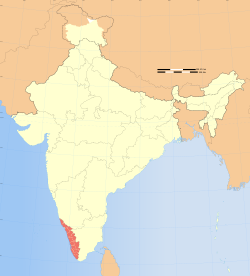
This was the winner of the 1997 Booker Prize. It is set in the Indian state of Kerala where they speak Malayalam. Befitting this palindromically named language, Estha(ppen) and Rahel, two egg twins, often speak words backwards. They way children see the world through different eyes, with innocence, is captured in the author's nursery rhyme approach to language and the repetition of certain words to capture misunderstood ideas.

The book starts with Rahel coming back to India to meet her twin brother Estha who has returned from where he was sent (to be with his abusive father). Estha has returned to the family home as an elective mute. Rahel watches him and explores the past. And we become aware of a great mystery in the past that is the secret reason why the twins are traumatised and dysfunctional. A secret that involves their Baby Grand Aunt.

Sophie Mol, the daughter of their jolly fat Uncle and his English wife, died on her short visit to their home when she and they were children. At the same time something happened to Velutha the Untouchable Odd Job man. Ammu, their mother, who tried to right whatever wrong was done, has died.

I read this story with a growing sense of dread. Something terrible has happened. Something awful. I wanted to know what had happened and I hoped that discovering the truth would set the twins free, but I feared that I would learn that they were guilty of terrible things. With deft dance steps the story moves around the truth, sometimes a little nearer, weaving a spell.

And the prose evokes the colour, the chaos, and the fecundity of India. And the characters are dazzlingly real, though mythic archetypes. And the narrative is hauntingly sad.

This was a book that I wanted to rush through to find out what had happened but I wanted to read slowly and savour every word because of the richness of the language.

Wonderful.

May 2011; 340 pages


This review was written by

the author of Motherdarling 

and The Kids of God

Friday, 25 May 2012

"50 Political Ideas you really need to know" by Ben Dupre

This book puts Politics into perspective. It shows that the latest ideas have been around for centuries. It points out that one's least loved ideas have something to be said for them and that their is a valid alternative viewpoint to one's core values. Politics is really the art of running society so that it functions. What works in one country or age or context won't work in another. No cows are sacred; we just have to find the next compromise.

May 2011; 203 pages


Tuesday, 22 May 2012

"A Strange Manuscript found in a Copper Cylinder" by James de Mille


This is a short allegorical novel. It is told in the format of the 'story within the story'; a group of indolent Victorians becalmed in the Atlantic on their yacht, find a copper cylinder bobbing about on the waves and discover a manuscript written on papyrus in it. This framing device enables the author to explain and analyse the rest of the story (and to debate whether it is fiction, fact or philosophy).

The narrator of the manuscript is a sailor named Adam More. Accidentally abandoned by his ship (shades of Robinson Crusoe) he travels to a mysterious land (Gulliver's Travels) at the South Pole where the inhabitants love darkness and death and hate light and life (there is a clear influence here of Poe's Narrative of Arthur Gordon Pym of Nantucket). He is befriended and honoured (the people love poverty so adore finding someone they can give things to) and meets Almah. At the point where they fall in love the carefree existence becomes a nightmare: they re condemned to the highest benefit the land can offer which is the benefit of death. Thus Adam's idyllic Edenic existence is destroyed by tasting the fruit of love which condemns him to death. They are transported from that land to the 'Amir' where wicked Layelah falls in love with Adam and schemes to flee with him.

At one level this is therefore Paradise Lost. At another level this describes (Adam's surname is More) Utopia: a nowhere land where possessions are a curse so that every man does his best to do his best for his neighbour. But utopia has its dark side too.

This book is partly a cheap romance of the Lost World/ Lost Horizon ilk and partly a work of ethical philosophy. Intriguing and weird.

May 2012; 203 pages.


This review was written by

the author of Bally and Bro, Motherdarling 

and The Kids of God

Sunday, 20 May 2012

"Medieval Intrigue" by Ian Mortimer

Subtitled 'Decoding Royal Conspiracies' this book is an attempt by Ian Mortimer to defend his controversial theory that Edward II was not murdered at Berkeley Castle by having a red hot poker thrust into his anus as popularised by Christopher Marlowe but survived imprisonment at both Berkeley and Corfe Castles to become a hermit in exile and later as 'William de Galeys' secretly to meet both son King Edward III and new born grandson Lionel of Antwerp.

To support these ideas he explains his technique of interpreting information streams (for example on the original reports of Edward II's murder at Berkeley and the narratives of the Earl of Kent's subsequent attempt to 'spring' Edward II from Corfe Castle which seems stupid if the king, Kent's brother, was already dead) and speculates on Edward III's relationship with Italian bankers. Edward acknowledged debts that these bankers could not possibly have supplied, given their limited capital. Mortimer hints that these were payments partly to keep his father captive abroad and partly blackmail (because if his father was alive then Edward III was complicit in the fraudulent death narrative). He also considers stories of royal pretenders in an attempt to suggest that they are somehow different from the Fieschi letter which was sent to Edward III describing the purported survival of his father although the story of Harold II surviving Hastings and travelling abroad as a hermit seems remarkably similar to the Edward II tale.

This book's misleading title led me to expect rather more conspiracies and I was disappointed. I also thought Mortimer fell between the two stools of academic and popular history writing. He is a brilliant popular historian and clearly an excellent if controversial academic historian; I just felt the academic side would have been better restricted to the academic journals.

From my point of view, Mortimer's least interesting history so far.

May 2012; 345 pages

Saturday, 12 May 2012

"City of Sin" by Catherine Arnold

I suppose I was naive to be quite so surprised at how rude this book was. It is an explicit history of sex (mostly in London but Arnold is happy to spread her wings when necessary) focussing mostly on prostitutes and rent boys. She is very good on words:

  • because Roman prostitutes satisfied their clients in the open air under arches (fornices) the practice became known as fornication which became the Germanic fokken which led to another word
  • wed means payment; Saxon wives were bought by their husband; the payment being symbolised by a ring
  • gay was the street slang for prostitute in Victorian days


Other discoveries included:

  • Gropecunt Lane was the haunt of cheaper prostitutes, It was later changed into Grape Street and later Grub Street "reminding all those who live by the pen that there is more than one way to prostitute oneself". 
  • The mistress of Edward IV, Jane Shore, survived both Richard III and Henry VII and is buried in Hinxworth Church.


My only criticism is that Arnold's historical research is sometimes suspect. She repeats urban myths as more or less true. She also dwells overlong on familiar stories such as Oscar Wilde and the Profumo Affair.

Well written, interesting and a real page-turner.

May 2012; 333 pages

Thursday, 3 May 2012

"The Swerve" by Stephen Greenblatt


I still can't quite understand why I loved this book so much. In 1417 Poggio, a Florentine, having lost his job as Apostolic Secretary when his boss, Pope John XXIII was deposed and imprisoned, finds an old manuscript in an anonymous monastery. The manuscript is the lost poem De Rerum Natura by Roman poet Lucretius and it outlines the atomic theories of Democritus embedded in the atheistic philosophy of Epicure. These powerful ideas spell the end of the middle ages and the beginning of the modern world.

It sounds like a cheap thriller by Dan Brown or a dry as dust history. It is fact and I loved it. It is a wonderful book, beautifully written, and full of some mind-bending ideas of which the Epicurean philosophy is just a gourmet taster.

"Humans, Aristotle wrote, are social animals: to realize one's nature as a human then was to participate in a group activity." On page 69 Greenblatt debunks the Enlightenment idea of the lone genius in favour of a distinctly modern 'team work' approach to collaborative learning.

On page 71 Greenblatt quotes Flaubert: "Just when the gods had ceased to be, and the Christ had not yet come, there was a unique moment in history, between Cicero and Marcus Aurelius, when man stood alone." Perhaps that moment has returned to us today.

"Epicurus thought it mad to think that divine beings would be interested in human activities. Why should God take human form rather than that of an ant or an elephant? "Christians are like a council of frogs in a pond, croaking at the top of their lungs, 'For our sakes the world was created'." (p98)

"As every pious reader of Luke's Gospel knew, Jesus wept, but there were no verses that described him laughing or smiling, let alone pursuing pleasure." (p105)

"The pattern of dreaming and deferral and compromise is an altogether familiar one: it is the epitome of a failed life." (p151)

"The quintessential emblem of religion .... is the sacrifice of a child by a parent." (p194): Agamemnon and Iphigenia, Abraham and Isaac, God and Jesus.

Amerigo Vespucci described the life of the natives of Brazil as Epicurean. Vespucci was a Florentine and part of the humanist circle who read De Rerum Natura. Thomas More used Vespucci's book as a source for Utopia.

Thomas Harriot observed sun spots and the lunar surface and the sine law of refraction etc etc before others but did not publish for fear of being accused of atheism.

And there is so much more in this wonderful, wonderful book.

May 2012; 263 pages

This review was written by

the author of Bally and Bro, Motherdarling 

and The Kids of God


Wednesday, 25 April 2012

"His Illegal Self" by Peter Carey

This novel follows an 8 year old boy, Che,  and is written partly from his perspective and partly from the perspective of his ex-nanny Dial.

Che lives with his wealthy but bohemian grandmother in New York. His parents are American urban guerrillas, outlawed and in hiding. His mother arranges for Dial (who also has a radical past) to take Che from his grandmother for a single hour of agreed contact, but the plans change and Dial takes Che to Philapelphia where Che's mother is killed by the bomb she is making. The grandmother thereupon accuses Dial of kidnapping Che and they go on the run together, ending up in a Hippy-run township in the Australian bush.

The interplay between the 8 year old misunderstanding everything and the framed Dial who resents the way she has been manipulated away from the cushy bourgeois lifestyle she was about to enjoy into the desperate existence of a fugitive in the bush is excellent. Other notable characters include Trevor who rips them off and steals their money and looks after them and tolerates Che's thefts and gives them their money back because after all he is a Hippy who likes to go naked and used to be a Barnados boy who was shipped out to Australia and lived with priests. The hippy lawyer worships Jazz musicians. The head of the hippy neighbourhood hates cats because they kill birds.

And the prose is wonderful. And the ending a surprise in the penultimate paragraph.

So why didn't I want to turn every page?

I think it was just a little too weird. April 2012; 272 pages


This review was written by

the author of Motherdarling 

and The Kids of God

"Winter King" by Thomas Penn

This fascinating biography of Henry VII focuses on the years between 1500 and his death in 1509. This was the time when Henry, having fought his way to the throne and married Elizabeth of York to legitimise his issue, suffered the twin succession crises of losing his first born and his queen leaving a very young Henry VIII (still only 17 when he ascended in 1509) as heir at a time when father to son succession had not occurred for nearly a century and with the Plantagenet pretender de la Pole, Earl of Suffolk, waiting abroad.

And Henry VII became the richest monarch in Europe through tax avoidance (he smuggled Venetian alum to circumvent the papal monopoly) and extortion (by accusing almost anyone of trumped up crimes and then either fining them or binding them over in excessive sums).

A fascinating and compelling portrait of one of England's lesser known (and least charismatic) kings. 

But I so wanted to lerarn about the first half of the reign. After the Battle of Bosworth in 1485, Henry had to reunite the country still reeling from the divisive Wars of the Roses. His own claim on the throne was marginal (Henry V's widow, ex Princess of France, had married her household steward). So how did he persuade everyone to follow him? This story deserves to be told.

Quotes: 

  • John Skelton exhorted us to "Love poets: athletes are two a penny but patrons of the arts are rare."
  • Henry VIII's tutor Lord Mountjoy lived near Greenwich Palace at Sayes Court (later lived in my John Evelyne, Admiral Benbow and briefly Czar Peter the Great)
  • Lady Margaret Beaufort, mother of Henry VII, lived at Collyweston Palace near Kettering
  • Henry VII confiscated Ampthill from the Earl of Kent because Kent was in debt here there and everywhere and mismanaging his lands
  • Another compulsory purchase was Hanworth which he made into a palace. 
  • Catherine of Aragon's wedding procession (to Henry VIII) went [ast the Cardinal's Hat Tavern near where the Globe now is.
A wonderful, beautifully written book. April 2012; 378 pages

Tuesday, 17 April 2012

"Herd" by Mark Earls

his is a UK take on a US-style marketing management through popular psychology book. Mark Earls works in marketing, worships Rugby and sings in a ska group. He writes well (which kept me going because I soon discovered that I wasn't really interested in marketing) but I suspect the shallowness of his research (despite lots of references he is prone to relying too much on a few academic authors and bulking this out with websites and newspapers). He is well described in the blurb as Malcolm Gladwell on speed.

His essential thesis is that we are 'super-social' animals and that therefore classical economics, marketing and management with their attempts to understand the group as the aggregate of the individuals are wrong. Rather, you need to understand the interactions in the complex organism-ations.

Most market people seek to develop one way channels of communication in an attempt to persuade people to buy their products. They fail to realise that the best marketing is done by peer-to-peer networks of word of mouth. The only way to market in the future is through developing trust by having sincere beliefs and being truly interested in other people.

On the way I learned that the Broken Windows approach to fighting crime in NY was to always mend broken windows and clean up graffiti because by taking care of the details we can persuade people that they want to live better lives and so they will start to behave in line with our aspirations. Or maybe just copy us (super-social apes imitate one another a lot) by mending their own windows and cleaning up their own graffiti. Perhaps this would also work when trying to persuade pupils to do homework.

Interesting but not overwhelmingly so. April 2012; 370 pages

Wednesday, 11 April 2012

"Peyton Place" by Grace Metalious

Peyton Place was the 'Desperate Housewives' of its day. India Knight's introduction tells me that it sold 60,000 copies in its first ten days; the TV series had an audience of 60 million. It scandalised America.

I found it almost unreadable. Even allowing for the fact that the sexual mores seem desperately outdated, I found it really badly written. Most novelists know the detailed back story of each or their characters and, using hints, make the reader interested in the characters whilst wanting to read more to understand the mysteries that the author has not yet set out in full. Metalious  introduces you to each of the characters in turn by explaining their back story. In full. Perhaps on the theory that in a small town there are no secrets. Except that her thesis is that Peyton Place is a small town run on the secrets that everybody hides or at least tries to hide from everyone else. There are a lot of characters. By page 100 I was bored. And the focus was on this silly spoilt little girl who was growing up.

The pace varies widely. Sometimes the book jumps a couple of years. Some critical episodes are described in a few pages; trivia is given as much space. Allison and Norman go on a picnic and discuss which sandwiches they prefer which has absolutely no bearing on either plot or character development; this just wastes words.

Characters don't really develop. Like robots in a Greek tragedy they follow their predestined dooms, wearing masks, except that they don't even discover their fatal flaws because every aspect of their personalities has been laid bare by Metalious. She doesn't believe in 'show, don't tell'. She explains everything.

The very worst bit is where Tom explains his view of sexuality to Constance. This is like an essay entitled 'what I have learned from the Kinsey report'. It should have a box around it and the words 'author's message' in bold above.

Yes, shocking things happen. But I did not care enough about any of the characters to really care. In any case, the wicked eventually got their just deserts and the good triumphed. This book is more like an extended morality play than a novel.

A dreadful potboiler. April 2012; 475 pages

Sunday, 8 April 2012

"The Last Day of a Condemned Man" and "Claude Gueux" by Victor Hugo


A novella and a short story in a slim volume.

"Le dernier jour d'un condamnee" is a plea for the abolition of the death penalty purportedly written by the condemned man himself. He sits in his cell reflecting upon his trial (although we never learn the exact nature of his crime) and his six weeks awaiting his appeal. Following the rejection of the appeal events move swiftly. In the single day he is transported to another prison, dreaming up pathetic escape strategies. He meets his daughter who is too young to remember him and has indeed been told that her father is already dead. Various priests try to comfort him but he is unable to imagine his fate, let alone reconcile himself to it. At the end he begs for five more minutes in the hope that a reprieve may come.

Given that this was written in the era of sentimental romanticism it could have been dreadful. But Hugo keeps the melodrama at bay and produces a powerful and eloquent plea for abolition. It is a clear precursor of Les Miserables; it mentions the yellow passport which means that a released convict cannot find honest work and so soon returns to a life of crime.

Claude Gueux continues the theme that noble characters might, because of the circumstances and social classes into which they were born, thieve by necessity and be relegated to the dregs of society but can still retain nobility whilst their captors can be brutal.

Beautifully written, powerful and short. April 2012; 130 pages

Other books by French authors reviewed in this blog can be found here

This review was written by

the author of Bally and Bro, Motherdarling 

and The Kids of God


Monday, 2 April 2012

"Mary Boleyn" by Alison Weir

This book is subtitled 'The Great and Infamous Whore'; Mary Boleyn, wife of the more famous Anne,  was said to have slept with both Francois I of France and Henry VIII of England.

The problem with the book is that there is very little information about Mary Boleyn but a great deal of speculation. Alison Weir spends an awful lot of this book debunking the rumours and ending with the statement that 'we just don't know'. Thus we don't know whether Mary slept with Francois I but Weir assumes she did but not for very long. We don't know whether Mary slept with Henry VIII but Weir assumes she did, for some years. We don't know whether Katherine Carey was Henry's daughter (but Weir assumes she was) or Henry Carey was Henry VIII's son (but Weir assumes not). We don't know whether Mary spent years in Calais or when she was born or whether she was older or younger than Anne.

All of which makes this book somewhat unsatisfying. It reads more like an academic trying to score points off the other scholars who have gone before her rather than a popular history book. There are large sections when we sift through other people's comments and the endless Henrys and Katherines and Marys, most of whom change their surnames as they marry or as they come into yet another temporary title.

Not exactly a ripping read.

April 2012; 256 pages

Saturday, 31 March 2012

"Lyttelton's Britain" by Iain Pattinson

Pattinson is the man who wrote Humphrey Lyttelton's scripts for I'm Sorry I Haven't A Clue and this book is a compilation of the descriptions of towns with which Lyttelton would introduce the programme.

Humph was a master of the double entendre and this book has a great selection of those. It also slags off every town. But somehow, reading the same basic joke time and again just gets boring. As a minute long introduction to a weekly programme this humour is often laugh aloud but in a book it gets a little boring.

Disappointing.

March 2012; 221 pages