Showing posts with label Booker. Show all posts

Tuesday, 3 May 2022

"The Promise" by Damon Galgut


Winner of the 2021 Booker Prize. For other winners of the Booker see here.

The Swarts are a white South African farming family, clinging on to their way of life through the political changes marking the end of apartheid and the birth of the new majority-rule  country. At the start of the book the mother of the family dies; on her deathbed she makes her husband promise to gift to the maidservant the house in which she (the servant) lives with her son. The refusal to honour this promise seems to act as a curse. 

The parallels with the decline of the nation are obvious. Swarts?

This beautifully written book is told through multiple interior monologues (though the thoughts are usually fairly well-formed and there seemed to be more tell than show; the author-in-character sometimes speaks directly to the reader), head-hopping in a 'PoV tag' sort of way that reminded me of Mrs Dalloway by Virginia Woolf. 

Selected quotes:

The page numbers refer to the Chatto & Windus 2021 hardback edition.

  • "Some of the other girls say Miss Starkey is a lesbian, but it's hard to imagine her doing anything sexy with anyone. Or maybe she did once and has been permanently disgusted ever since." (p 3)
  • "Tannie Marina is always baking things and trying to feed them to people. Her sister Astrid says it's so she doesn't have to be fat alone." (p 5)
  • "She is prone to paranoid fears like these, suspecting sometimes that her mind can be secretly read by people around her, or that life is an elaborate performance in which everybody else is acting and she alone is not." (p 24)
  • "No need to dwell on the image of the old woman with her knickers around her ankles and her finger up her fundament, at such moments she feels very far from God. " (p 46)
  • "You don't think about sex, you suffer it. A scratchy, hungry thing going on in the basement." (p 54)
  • "It is not always possible to please two white people simultaneously." (p 66)
  • "Survival isn't instructive, just demeaning." (p 94)
  • "Oh, yes. When you've claimed a man's gun, you claim the man too. Law of the frontier. Oh, balls, Anton, who scripts these thoughts for you?" (p 145)
  • "Not every chance is an opportunity. Sometimes a chance is just a waste of time." (p 157)
  • "When white people fight, her mother declares without a scrap of rational evidence, it is always over property!" (p 252)
  • "No love left, only kindness, which is maybe stronger. More durable, anyhow." (p 257)
  • "Fornication rates all over the country rise dramatically on the night of Zuma's resignation." (p 271)
  • "She has been harbouring a secret hope that her husband's life work might just turn out to be a masterpiece. Who knows, even better than Wilbur Smith. Imagine!" (p 279)
  • "And when the storm finally passes, in the small hours, it leaves a dripping calmness behind it. Snails unfurl themselves in the undergrowth and push forth, little galleons on a dark green sea, trailing their little silver wakes. From the soil, musky pheromonal odours twine up like tendrils on the air." (p 291)

April 2022; 293 pages



This review was written by

the author of Bally and Bro, Motherdarling 

and The Kids of God


Thursday, 25 September 2014

"Jamrach's Menagerie" by Carol Birch

Jaffy, an eight year old boy, encounters an escaped tiger on the Ratcliffe Highway and subsequently becomes employed by Mr Jamrach to look after the animals in his rather exotic per shop. This leads to him going to sea with his best friend Tim and animal hunter Dan Rymer in search of a Dragon from the South China Seas. Adventures and horrors ensue. This last section of the book seems to draw on the real story of the whaling ship Essex as recounted in Nathaniel Philbrick's In the Heart of the Sea.

This was well-written with a real feel for character, dialogue and setting. Jaffy is a lovely character, a dirt-poor Londoner with two jobs at eight years old and not a trace of 'poor me': this is the way life (and death) is and he explains it clearly. The supporting characters are also brilliantly drawn and I particularly loved the way that the ship's crew, more than a dozen, were characterised up to the limit of Jaffy himself knowing them: after one has died Jaffy bemoans the fact that he didn't know him well enough. I adored the careful blend of innocence and knowingness that makes up Jaffy, who is a virgin for most of the book but a pipe smoker from almost page one.

But I was confused by the plot construction. On the one hand I understand that if you are telling someone's life it isn't likely to be a straightforward journey. On the other hand: why was it called 'Jamrach's Menagerie' when that forms a relatively small part of the plot? Is this a metaphor? Are the members of the crew of the ship like the animals captured and confined in Mr Jamrach's pet shop? And is the encounter with the tiger another metaphor, perhaps for the jaws of death? And why the dragon?

And the pace was interesting too. I read quite slowly at first. I was more than half way through before I really wanted to know what happened in the end. And the first part of the book is wide ranging with a lot of incident and different characters and conversations but the last part of the book is much more intense with a lot more soliloquy. I was impressed that the writing was good enough to keep me going in this last bit although it was there that I was reading fast and perhaps missing some of the nuances.

A bit of a rag bag in construction but beautifully written. September 2014; 344 pages

This book was nominated for the 2011 Booker along with Pigeon English but they both lost out to A Sense of an Ending by Julian Barnes.

Sunday, 30 December 2012

"The unlikely pilgrimage of Harold Fry" by Rachel Joyce


Longlisted for the 2012 Booker Prize

Wow! This was a powerful novel. I cried.

Harold Fry is trapped in a loveless marriage with wife Maureen; only son David no longer lives with them. A letter arrives from an old colleague, Queenie Hennessy. She is dying of cancer in Berwick on Tweed. Harold writes a brief reply and walks to the letter box to post it. But he keeps going. He decides to walk, in his yachting shoes, from his home in Devon to Berwick.

On the route he thinks about his marriage and why it went wrong, of the debt he owes to Queenie, of his mother who walked out on him and his alcoholic father, and of his failed relationship with his son. And his abandoned wife thinks her thoughts too.

I related so very well to the early descriptions of walking. Every year I go for a walk, on my own. I have walked along the Thames, from Oxford to Cambridge, from St Paul's to Canterbury, along the Lea Valley, and along the South Coast from Brighton to Folkestone. I understood when Harold felt that walking was so much more intense than driving; when you walk you are a part of the landscape rather than travelling through the landscape. I empathised with the feeling of embarrassment at being the only person in the guest house on their own. And how I winced with every blister!

But I also wanted so much to understand what had gone wrong with Harold's life. What happened to alienate him from his son? Why had he drifted apart from his wife? And why did he owe Queenie such a debt? These puzzles had me racing through the book when I wanted to talk, step by step.

Will he make it? And if he does, how will he ever go back to being 'normal'? And will Queenie die?

Terrific human drama. Possibly the best book I have read this year. Superb! December 2012; 296 pages


This review was written by

the author of Bally and Bro, Motherdarling 

and The Kids of God


It has subsequently been pointed out to me by another reader that the book loses a little in  the middle part when Harold is joined by a motley collection of hippies and other supporters who publicise and try to take over the purpose of the 'pilgrimage'. This reader suggested that the narrative lost its way at this point (although, like Harold, it found its way again later). I agree that a little momentum was lost here although I understand the point of trying to show how publicity can warp purpose. Perhaps the story would have been better had it been a little leaner and had this sub-plot been excised. Let the readers decide!


Wednesday, 21 November 2012

"The sense of an ending" by Julian Barnes


My sister hated this Booker 2011 prize winner. It beat Jamrach's Menagerie and Pigeon English; I would probably have awarded the prize to the last. TSoaE was also shortlisted for the Costa Award in 2011.

A recently retired man looks back on his youth with imperfect memory. In particular he remembers the University girlfriend who teased him, whom he dumped, who got involved with his best friend from school. His memories have been jogged by a recent legacy. But is he more sinned against than sinning or is the ex-girlfriend right when she says that he never 'got' it?

Short, very readable and well-crafted. The only problem with this book was that I'm not sure whether I 'got' it even at the end. Perhaps I didn't think the sin so terrible that it merited even a small book and the humdrum, even with well honed prose and carefully measured wit, rarely captivates.

November 2012; 150 pages

Julian Barnes also wrote England, England. I wouldn't bother. He also wrote Departure(s), a reflection of ageing and dying.


This review was written by

the author of Bally and Bro, Motherdarling 

and The Kids of God


Monday, 28 May 2012

"The God of Small Things" by Arundhati Roy

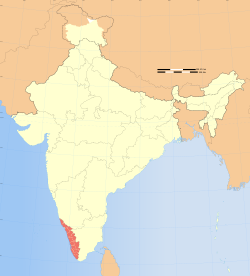
This was the winner of the 1997 Booker Prize. It is set in the Indian state of Kerala where they speak Malayalam. Befitting this palindromically named language, Estha(ppen) and Rahel, two egg twins, often speak words backwards. They way children see the world through different eyes, with innocence, is captured in the author's nursery rhyme approach to language and the repetition of certain words to capture misunderstood ideas.

The book starts with Rahel coming back to India to meet her twin brother Estha who has returned from where he was sent (to be with his abusive father). Estha has returned to the family home as an elective mute. Rahel watches him and explores the past. And we become aware of a great mystery in the past that is the secret reason why the twins are traumatised and dysfunctional. A secret that involves their Baby Grand Aunt.

Sophie Mol, the daughter of their jolly fat Uncle and his English wife, died on her short visit to their home when she and they were children. At the same time something happened to Velutha the Untouchable Odd Job man. Ammu, their mother, who tried to right whatever wrong was done, has died.

I read this story with a growing sense of dread. Something terrible has happened. Something awful. I wanted to know what had happened and I hoped that discovering the truth would set the twins free, but I feared that I would learn that they were guilty of terrible things. With deft dance steps the story moves around the truth, sometimes a little nearer, weaving a spell.

And the prose evokes the colour, the chaos, and the fecundity of India. And the characters are dazzlingly real, though mythic archetypes. And the narrative is hauntingly sad.

This was a book that I wanted to rush through to find out what had happened but I wanted to read slowly and savour every word because of the richness of the language.

Wonderful.

May 2011; 340 pages


This review was written by

the author of Motherdarling 

and The Kids of God

Tuesday, 27 March 2012

"Wolf Hall" by Hilary Mantel

I have read Mantel's Beyond Black and thoroughly enjoyed it but Wolf Hall is such a doorstep of a book that I thought I would find it tedious.

For at least the first hundred pages it was a historical bio-epic of no especial literary merit.  I was interested by the character of Thomas Cromwell, depicted sympathetically rather than the black-garbed devil of historical propaganda. I was slightly annoyed by the first person narrative in the third person: Cromwell refers to himself as 'he' but it is written entirely from his point of view and you think his thoughts.

Then I began to seriously identify with his character. As Deputy  to a larger than life Headteacher I have been the fixer, the manager, the creator of possibilities and sometimes the hitman, always surviving within and by the favour of my boss. And yesterday at a meeting I started thinking to myself: 'What would Cromwell do in this situation'.

I was also desperate to find out what happened to him and why the novel is named Wolf Hall.

When a character in a book grabs you so completely then you have to admit that somehow the novelist has become a magician and you are enchanted by her spells. And that is why it was shortlisted for the Costa Award in 2009, the Women's Prize for fiction in 2010 and won the Booker Prize (2009) and the inaugural Walter Scott Prize for Historical Fiction in 2010.

Page turner.

March 2012; 650 pages


This review was written by

the author of Bally and Bro, Motherdarling 

and The Kids of God


Monday, 26 January 2009

Vernon God Little by DBC Pierre


Winner of the Man booker Prize 2003!

This book is set in the fictional(?) town of Martirio (which is the Italian, Spanish and Portuguese word for martyrdom), the Barbecue Sauce capital of central Texas and concerns Vernon, the survivor of a multiple school shooting perpetrated by his best friend, a gay Mexican called Jesus. Vernon has been arrested as accessory although he is soon released thanks to an honest Judge and an incompetent cop who both belong to the town's leading family. The misadventures of Vernon as he is hounded by a reporter more concerned with career than truth and tormented by his mother and her bizarre lady friends read like a strange mix of "A Confederacy of Dunces", "Catcher in the Rye", "Good Times, Bad Times" and "Decline and Fall". Viewed in one way it is a boy's cry for help in a dysfunctional world. Viewed in another way it is a very black comedy. His relationship with his mother is exactly like that of every adolescent boy: helpless infuriated, unbelieving yet loving and protective.

Symbolism
I guess Vernon is Jesus (not the Jesus who wears silk panties and shoots the school up) and Taylor is Judas. Lally is the devil. I'm OK with the court and the quite nice judge who tries to help Vernon but in the end washes his hands. Death Row is presumably Hell though Vernon is there for rather longer than three days. I have no idea what part the old con plays, nor Mr Nuckles.

Brilliant. Well worth the Booker.

Jan 2009. 274 pages