When actress Edie's last child leaves home she gets a dose of empty nest blues. On the other hand, husband Russell (a theatrical agent) looks forward to discovering his wife again. So when his daughter Rosa gets the sack and finds herself in debt and asks to come home he says no. Then elder son Matt breaks up with high-powered business woman girlfriend Ruth and returns home, Edie gets cast in an Ibsen play and offers her son on stage a room in her house and soon the house is full again. But a house full of resentful rent-paying adults isn't quite as comfortable as a family home and tensions rise.
Essentially a well written Mills and Boon saga without the muscles and heaving bosoms and with one or two of the characters nicely drawn. It lacks depth but it certainly kept me turning the pages.
June 2012; 382 pages
Sunday, 24 June 2012

Sunday, 17 June 2012
"Single and Single" by John Le Carre
John Le Carre's latest book starts with an English lawyer being shot dead on a Turkish hillside. It cuts to adivorced children's entertainer in a depressing seaside town. Linking these two is the private bank of Single & Single whose proprietor, Tiger Single, launders money and does dodgy development deals with Russian, Polish, Turkish and Georgian gangsters. Meanwhile British customs hunts the Hydra, the corrupt organisation at the heart of the British establishment.
This is Le Carre's stylish answer to what happens to the spy novel when the Cold War ends. Harking back to his classic work, Single turns pages.
June 2012; 335 pages
This is Le Carre's stylish answer to what happens to the spy novel when the Cold War ends. Harking back to his classic work, Single turns pages.
June 2012; 335 pages
"The monk and the hangman's daughter" by Ambrose Bierce
This novella purports to be a rewrite of a translation from a German original which allows Bierce to create an archaic romantic tale. Told in journal form in the first person by a young monk who has been sent into remote mountains to test his vocation before ordination as a priest. Here he meets a hangman's daughter. She is shunned by the community and by the church (she is not allowed to be baptised) because of her parentage. He champions her to the point of tragedy.
It is one of those books where the reader is one step ahead of the narrator. Thus we realise that the monk has carnal desires for the girl before he does.
The story also allows Bierce to subtly criticise religion. We are outraged with the monk that the church has cast out the girl even when she has no sin (and there is a scene where she is wrongly punished). There are also sly digs: at the end of the first chapter the monk says that the Lutherans believe that faith can move mountains but, looking at the mountains he is about to climb and from the perspective of a Roamn Catholic, "I greatly doubt it." Later, when climbing the mountains, he doubts the belief that the Lord has a purpose for everything since stones "are a blessing to neither man nor beast".
Although the structure of the book is transparent and we are always several jumps ahead of the narrative (except right at the end when Bierce plays with your expectations about the identity of the victim) this is a charming little book and well worth the very little time it takes to read.
June 2012; 93 pages
Friday, 15 June 2012
"Death of Kings" by Bernard Cornwell
This historical novel is set in the last year of Alfred the Great's reign and the year after that. The Danes of the North are ready to invade Wessex as soon as Alfred pops his clogs. Alfred's brother's son is ready to challenge Alfred's son for the throne of Wessex. The Ealdorman of Cent wants to be King of Cent rather than Alfred's son Edward. The Mercians want Mercia to be independent of Wessex. And into all this steps Uhtred of Bamburgh, a pagan Saxon born in Northumbria but fighting for Alfred, lord of a poor manor near Buckingham in the part of Mercia the Saxons hold.
Uhtred journeys down the Ouse past Bedford to fight the Danes at St Neots. Then he travels to meet a prophetess and burn Danish long ships in Nottingham. He is a sort of Dark Age James Bond, fighting the Danes and protecting the Saxons, even though they don't much care for him. I didn't like him very much either, he is casually brutal, hanging prisoners without a thought, and he has sex with any women he wants although love is reserved for the King's daughter (much to the annoyance of her husband). He has about as much three dimensionality as James Bond too; he kills and he fucks, he has no personality.
And the plot is complicated by the fat that every other Saxon is called Aethel-something. There is almost too much history and insufficient wonder.
A decent yarn but lacking in depth.
On the other hands, Fools and Mortals, narrated by Richard Shakespeare, Will's brother and set in Elizabethan London, is a great yarn.
June 2012; 335 pages
Friday, 8 June 2012
"The Black Spider" by Jeremias Gotthelf
This bucolic allegory was written by a Bernese pastor. A charming rural farming community are celebrating a baptism. Much is made of the celebration: it revolves around multiple meals of vast proportions and everyone politely urging everyone else to gluttony. At considerable length, after lunch, the grandfather tells a tale of the village in mediaeval times when the peasantry were oppressed by the knights in the castle on the hill. Impossible demands led them to despair and then to making a pact with the devil. But then they try to trick the devil out of his side of the bargain (an unbaptised child) and he visits a spidery scourge upon them.
This novella is flawed in two ways. Morally it is horrible that so many people should die as a result of one person making an agreement with the devil, especially when that person was under tremendous pressure. Admittedly the rest of the village (except the priest, who also died, but his was a good death) went along with the satanic bargain but the multiple death sentence seems vastly out of proportion even for a smug Vistorian pastor. The second flaw is literary. Apart from the jolly godmother who is repeatedly obliged to eat more than she professes to want and is deadly scared of forgetting the baptismal name all the other characters are two dimensional goodies or baddies with nothing to round them.
Very much a book of two halves, the beautifully observed christening (which has no function in the narrative) and a straightforward folk tale of devilry.
June 2012; 109 pages
"The state of Africa" by Martin Meredith
This is a comprehensive study of Africa since independence. It travels, more or less chronologically, from country to country, starting with Ghana as Kwame Nkrumah makes the jump from political prisoner to Prime Minister in a single day. We travel to Afrique Noire as France reluctantly releases its hold on Dahomey, Niger, Upper Volta, Cote d'Ivoire, Chad, the Central African Republic, the French Congo, Gabon and Senegal in a single month, August 1960. It was even more reluctant to release Algeria. We learn of the difficulties faced by the new countries as they tried to recover from colonialism with a minimum of infra-structure, almost no skilled workforce, and national boundaries that ignored traditional ethnic and tribal divisions. It talks of the Big Men such as Hastings Banda in Malawi who was a South London GP until he was 60 when he returned to Nyasaland and led it to independence, ruling it for another 30 years. We hear of Mobutu and Gadaffi and Nyerere and Idi Amin.
Africa's misfortune was to be colonised. Then it suffered from an era of dictators who plundered whatever resources they could. First they nationalised everything so they could get rich from controlling revenues and bribes. Most of the nationalised industries were incredibly inefficient; ghost jobs were created for friends and family and those who paid bribes. The industries were propped up with state loans or foreign aid. Then the Big Men privatised everything so that their cronies and their families could get their hands on state assets cheaply.
Then they fought wars. They fought for oil fields and diamond fields. They fought civil wars to control the government so they could divert government revenues into their own pockets. They fought to placate political interests at home. They fought to even old tribal scores. And they fought as proxies for the cold war superpowers.
The superpowers and the old colonial masters made things worse. Even after the genocide was a matter of public knowledge, France intervened in Rwanda on the side of the Hutu who were killing the Tutsis. The US regularly backed Mobutu even against African leaders who were relatively good guys. International aid kept Biafra fighting enabling Biafra's leaders to cynically sacrifice even more of their population.
Even now most of the Big Men have gone the democratic regimes replacing them have mostly been deeply corrupt. And now we have the scourge of AIDS. In Botswana, uniquely peaceful and democratic since independence, 37% of its 1.6 million people have HIV; life expectancy is 27. AIDS kills teachers faster than they can be trained.
This is a deeply gloomy book. Africa has so many natural resources and is mired in such endemic poverty. Aid and debt relief are wasted or stolen or used to maintain armies. There seems to be no solution.
Sad. But a beautifully written book. Very readable.
June 2012; 688 pages
Monday, 28 May 2012
"The God of Small Things" by Arundhati Roy
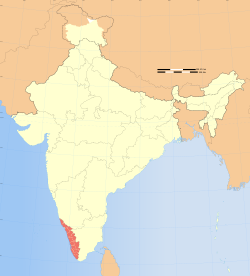
The book starts with Rahel coming back to India to meet her twin brother Estha who has returned from where he was sent (to be with his abusive father). Estha has returned to the family home as an elective mute. Rahel watches him and explores the past. And we become aware of a great mystery in the past that is the secret reason why the twins are traumatised and dysfunctional. A secret that involves their Baby Grand Aunt.
Sophie Mol, the daughter of their jolly fat Uncle and his English wife, died on her short visit to their home when she and they were children. At the same time something happened to Velutha the Untouchable Odd Job man. Ammu, their mother, who tried to right whatever wrong was done, has died.
I read this story with a growing sense of dread. Something terrible has happened. Something awful. I wanted to know what had happened and I hoped that discovering the truth would set the twins free, but I feared that I would learn that they were guilty of terrible things. With deft dance steps the story moves around the truth, sometimes a little nearer, weaving a spell.
And the prose evokes the colour, the chaos, and the fecundity of India. And the characters are dazzlingly real, though mythic archetypes. And the narrative is hauntingly sad.
This was a book that I wanted to rush through to find out what had happened but I wanted to read slowly and savour every word because of the richness of the language.
Wonderful.
May 2011; 340 pages

Friday, 25 May 2012
"50 Political Ideas you really need to know" by Ben Dupre
This book puts Politics into perspective. It shows that the latest ideas have been around for centuries. It points out that one's least loved ideas have something to be said for them and that their is a valid alternative viewpoint to one's core values. Politics is really the art of running society so that it functions. What works in one country or age or context won't work in another. No cows are sacred; we just have to find the next compromise.
May 2011; 203 pages
May 2011; 203 pages
Tuesday, 22 May 2012
"A Strange Manuscript found in a Copper Cylinder" by James de Mille

This is a short allegorical novel. It is told in the format of the 'story within the story'; a group of indolent Victorians becalmed in the Atlantic on their yacht, find a copper cylinder bobbing about on the waves and discover a manuscript written on papyrus in it. This framing device enables the author to explain and analyse the rest of the story (and to debate whether it is fiction, fact or philosophy).
The narrator of the manuscript is a sailor named Adam More. Accidentally abandoned by his ship (shades of Robinson Crusoe) he travels to a mysterious land (Gulliver's Travels) at the South Pole where the inhabitants love darkness and death and hate light and life (there is a clear influence here of Poe's Narrative of Arthur Gordon Pym of Nantucket). He is befriended and honoured (the people love poverty so adore finding someone they can give things to) and meets Almah. At the point where they fall in love the carefree existence becomes a nightmare: they re condemned to the highest benefit the land can offer which is the benefit of death. Thus Adam's idyllic Edenic existence is destroyed by tasting the fruit of love which condemns him to death. They are transported from that land to the 'Amir' where wicked Layelah falls in love with Adam and schemes to flee with him.
At one level this is therefore Paradise Lost. At another level this describes (Adam's surname is More) Utopia: a nowhere land where possessions are a curse so that every man does his best to do his best for his neighbour. But utopia has its dark side too.
This book is partly a cheap romance of the Lost World/ Lost Horizon ilk and partly a work of ethical philosophy. Intriguing and weird.
May 2012; 203 pages.

Sunday, 20 May 2012
"Medieval Intrigue" by Ian Mortimer
Subtitled 'Decoding Royal Conspiracies' this book is an attempt by Ian Mortimer to defend his controversial theory that Edward II was not murdered at Berkeley Castle by having a red hot poker thrust into his anus as popularised by Christopher Marlowe but survived imprisonment at both Berkeley and Corfe Castles to become a hermit in exile and later as 'William de Galeys' secretly to meet both son King Edward III and new born grandson Lionel of Antwerp.
To support these ideas he explains his technique of interpreting information streams (for example on the original reports of Edward II's murder at Berkeley and the narratives of the Earl of Kent's subsequent attempt to 'spring' Edward II from Corfe Castle which seems stupid if the king, Kent's brother, was already dead) and speculates on Edward III's relationship with Italian bankers. Edward acknowledged debts that these bankers could not possibly have supplied, given their limited capital. Mortimer hints that these were payments partly to keep his father captive abroad and partly blackmail (because if his father was alive then Edward III was complicit in the fraudulent death narrative). He also considers stories of royal pretenders in an attempt to suggest that they are somehow different from the Fieschi letter which was sent to Edward III describing the purported survival of his father although the story of Harold II surviving Hastings and travelling abroad as a hermit seems remarkably similar to the Edward II tale.
This book's misleading title led me to expect rather more conspiracies and I was disappointed. I also thought Mortimer fell between the two stools of academic and popular history writing. He is a brilliant popular historian and clearly an excellent if controversial academic historian; I just felt the academic side would have been better restricted to the academic journals.
From my point of view, Mortimer's least interesting history so far.
May 2012; 345 pages
Saturday, 12 May 2012
"City of Sin" by Catherine Arnold
I suppose I was naive to be quite so surprised at how rude this book was. It is an explicit history of sex (mostly in London but Arnold is happy to spread her wings when necessary) focussing mostly on prostitutes and rent boys. She is very good on words:
Other discoveries included:
My only criticism is that Arnold's historical research is sometimes suspect. She repeats urban myths as more or less true. She also dwells overlong on familiar stories such as Oscar Wilde and the Profumo Affair.
Well written, interesting and a real page-turner.
May 2012; 333 pages
- because Roman prostitutes satisfied their clients in the open air under arches (fornices) the practice became known as fornication which became the Germanic fokken which led to another word
- wed means payment; Saxon wives were bought by their husband; the payment being symbolised by a ring
- gay was the street slang for prostitute in Victorian days
Other discoveries included:
- Gropecunt Lane was the haunt of cheaper prostitutes, It was later changed into Grape Street and later Grub Street "reminding all those who live by the pen that there is more than one way to prostitute oneself".
- The mistress of Edward IV, Jane Shore, survived both Richard III and Henry VII and is buried in Hinxworth Church.
My only criticism is that Arnold's historical research is sometimes suspect. She repeats urban myths as more or less true. She also dwells overlong on familiar stories such as Oscar Wilde and the Profumo Affair.
Well written, interesting and a real page-turner.
May 2012; 333 pages
Thursday, 3 May 2012
"The Swerve" by Stephen Greenblatt

I still can't quite understand why I loved this book so much. In 1417 Poggio, a Florentine, having lost his job as Apostolic Secretary when his boss, Pope John XXIII was deposed and imprisoned, finds an old manuscript in an anonymous monastery. The manuscript is the lost poem De Rerum Natura by Roman poet Lucretius and it outlines the atomic theories of Democritus embedded in the atheistic philosophy of Epicure. These powerful ideas spell the end of the middle ages and the beginning of the modern world.
It sounds like a cheap thriller by Dan Brown or a dry as dust history. It is fact and I loved it. It is a wonderful book, beautifully written, and full of some mind-bending ideas of which the Epicurean philosophy is just a gourmet taster.
"Humans, Aristotle wrote, are social animals: to realize one's nature as a human then was to participate in a group activity." On page 69 Greenblatt debunks the Enlightenment idea of the lone genius in favour of a distinctly modern 'team work' approach to collaborative learning.
On page 71 Greenblatt quotes Flaubert: "Just when the gods had ceased to be, and the Christ had not yet come, there was a unique moment in history, between Cicero and Marcus Aurelius, when man stood alone." Perhaps that moment has returned to us today.
"Epicurus thought it mad to think that divine beings would be interested in human activities. Why should God take human form rather than that of an ant or an elephant? "Christians are like a council of frogs in a pond, croaking at the top of their lungs, 'For our sakes the world was created'." (p98)
"As every pious reader of Luke's Gospel knew, Jesus wept, but there were no verses that described him laughing or smiling, let alone pursuing pleasure." (p105)
"The pattern of dreaming and deferral and compromise is an altogether familiar one: it is the epitome of a failed life." (p151)
"The quintessential emblem of religion .... is the sacrifice of a child by a parent." (p194): Agamemnon and Iphigenia, Abraham and Isaac, God and Jesus.
Amerigo Vespucci described the life of the natives of Brazil as Epicurean. Vespucci was a Florentine and part of the humanist circle who read De Rerum Natura. Thomas More used Vespucci's book as a source for Utopia.
Thomas Harriot observed sun spots and the lunar surface and the sine law of refraction etc etc before others but did not publish for fear of being accused of atheism.
And there is so much more in this wonderful, wonderful book.
May 2012; 263 pages

Wednesday, 25 April 2012
"His Illegal Self" by Peter Carey
This novel follows an 8 year old boy, Che, and is written partly from his perspective and partly from the perspective of his ex-nanny Dial.
Che lives with his wealthy but bohemian grandmother in New York. His parents are American urban guerrillas, outlawed and in hiding. His mother arranges for Dial (who also has a radical past) to take Che from his grandmother for a single hour of agreed contact, but the plans change and Dial takes Che to Philapelphia where Che's mother is killed by the bomb she is making. The grandmother thereupon accuses Dial of kidnapping Che and they go on the run together, ending up in a Hippy-run township in the Australian bush.
The interplay between the 8 year old misunderstanding everything and the framed Dial who resents the way she has been manipulated away from the cushy bourgeois lifestyle she was about to enjoy into the desperate existence of a fugitive in the bush is excellent. Other notable characters include Trevor who rips them off and steals their money and looks after them and tolerates Che's thefts and gives them their money back because after all he is a Hippy who likes to go naked and used to be a Barnados boy who was shipped out to Australia and lived with priests. The hippy lawyer worships Jazz musicians. The head of the hippy neighbourhood hates cats because they kill birds.
And the prose is wonderful. And the ending a surprise in the penultimate paragraph.
So why didn't I want to turn every page?
I think it was just a little too weird. April 2012; 272 pages

Subscribe to:
Posts (Atom)