Monday, 30 July 2012

"The Tiger's Wife" by Tea Obreht

Set in Yugoslavia after its disintegration, a young girl doctor explores her memories of her grandfather, also a doctor, and the circumstances of his death. The petty feuds and jealousies of the isolated village in which he grew up serve as a microcosm for the internecine wars that have torn families apart in the Balkan civil war. And with the hatred and fear comes superstition.

A tiger escapes from the zoo and finds its way to the village in which the grandfather is a young boy. Here he is looked after and fed by the butcher's deaf-mute wife; the butcher who is gay and a wannabe musician and who was tricked into marrying her, batters his wife. Then the butcher disappears and his wife is pregnant. The village believes that she has wed the devil, in the shape of the tiger, and seeks her death.

This story is mingled with the tale of the deathless man whom the grandfather doctor meets at key moments. The deathless man may or may not be a vampire; he claims to be death's nephew; it is certain that he carries a coffee cup in which he can see whether a man will imminently die or live.

An unusual mixture of reality and magic, lyrically and compellingly told. 

Winner of the 2011 Women's Prize for fiction.

July 2012; 336 pages


This review was written by

the author of Bally and Bro, Motherdarling 

and The Kids of God

Tuesday, 24 July 2012

"When we were orphans" by Kazuo Ishiguro


Celebrated private detective, Christopher Banks, returns to Shanghai to solve the mystery of the disappearance of his parents.

The book is written in a sort of diary style. There are a number of extracts purportedly penned on specific dates. The narrator can look back on what happened before in each extract but, of course, the narrator has no knowledge of what will happen next.

As a society detective the narrator comes to believe in his ability to solve mysteries that have puzzled others for many years. He also comes into contact with Sarah Hemmings, an intriguing character who is seeking to marry a man she can help to achieve things and who is ruthless about pursuing those objectives, dumping boyfriends and making a fuss at soirees with no sign of embarrassment. Sarah is a figure who recurs through the narrative; she is also an orphan.

The book becomes quite bizarre when the narrator returns to Shanghai in 1937, leaving behind an orphaned girl he has casually adopted. He assumes that everyone he meets knows of his and his case. The embassy seems so convinced of his ability to find and rescue his parents from their kidnappers that they are planning the welcome back ceremony. He becomes utterly arrogant and obsessed, convinced that his solving this case will mend the degenerate Shanghai community even as the Japanese fire shells over their heads into the Chinese army. He is taken to his old home where a family of Chinese live and they tell him that he is entitled to his old house back even though it always belonged to the Company. This is becoming bizarre.

The book takes leave of reality when his obsession takes him into the war zone and he convinces a Chinese lieutenant to lend him troops to rescue his parents. This now becomes a nightmare. He travels through the poorest Chinese slums, destroyed by bombs, dodging the fighting armies, listening to men dying, avoiding rotting piles of human intestines. He rescues a wounded Japanese soldier from vengeful Chinese peasants; the soldier just happens to be his childhood friend. Despite the squalor and the incredible danger he obsessively pursues his mission.

In the end he has betrayed everyone for what seems to be nothing. He meets a celebrated Communist traitor and the story is resolved.

I found it extraordinarily difficult to believe that the war zone sequence was anything more than an allegorical nightmare and yet I couldn't reconcile that with the rest of the story. I never really accepted the main character; his actions seemed arbitrary and strange. Perhaps that was the point.

A puzzle written in Ishiguro's finest prose. July 2012; 313 pages. Shortlisted for the 2000 Booker Prize and the 2000 Whitbread Novel Award


This review was written by

the author of Motherdarling 

and The Kids of God

Monday, 23 July 2012

"Peter Schlemihl" by Adelbert von Chamisso

The eponymous hero sells his shadow to a 'man in grey' (because "the devil isn't as black as he's painted") in return for a purse of never-ending gold. But he is shunned by everyone (except his faithful servant) as soon as they espy his lack of shadow. The devil then offers to sell the shadow back to Peter in return for his soul.

An adult fable written by a man who fled revolutionary France for Berlin, joined the Prussian army, fought against France, later returned to France but for the rest of his was always a German in France or a Frenchman in Germany.

One nice touch: it is purportedly written by Peter to "my dear Chamisso", the author.

Naive. July 2012; 124 pages

Other books by German authors reviewed in this blog.


This review was written by

the author of Motherdarling 

and The Kids of God

Saturday, 21 July 2012

"A More Perfect Heaven" by Dava Sobel

The author of Longitude, which told of John Harrison's struggle to perfect the chronometer and claim the Board of Navigation prize, now turns her attention to 'How Copernicus Revolutionised the Cosmos'"

Sobel is a brilliantly readable writer of Science history. She makes her subject come alive. Copernicus was a  Catholic Pole in Minor Orders (never an ordained priest, only a canon or trustee of his cathedral) who did a lot of good work administering the cathedral lands (in effect a self-governing state of the Holy Roman Empire) at about the time the Lutheranism was infecting large parts of Germany. Against this backdrop he pursued his interest in Astronomy. He became well known in astronomical circles and contributed to a papal committee investigating calendar reform. He clearly realised early that he could better calculate astronomical tables if he put the sun at the centre of the universe rather than the earth; it probably took him longer to decide that this reflected physical reality. There were two objections. In the Bible Joshua commands the sun to stand still; why would he have said this unless the sun was moving? Copernicus seems to have decided quite early that this should be interpreted differently. The second problem was that the earth does not seem to move. It may have taken Copernicus a little longer to accept that the appearance belied the reality.

Nevertheless he delayed publishing his book because he was fearful of the inevitable backlash, both ridicule and angry charges of heresy. Finally a Lutheran mathematician, Rheticus, travelled to Copernicus to convince him to publish; this seems to have been the catalyst that bred De Revolutionibus.

Having written plain history, Sobel turns to play-writing to dramatise the moment when Copernicus met Rheticus. There were other pressures at the time. The Bishop was trying to persuade Copernicus to give up his housekeeper because of the scandal of a once-married woman living with a canon. Rheticus seems to have been gay (later he was accused and convicted in absentia of sodomy). It is an interesting device to insert fiction into history but Sobel seems to carry this off perfectly.

A wonderful little book. July 2012; 236 pages

Tuesday, 17 July 2012

"The best from fantasy and science fiction sixth series" edited by Anthony Boucher

When I was young I used to go to Sunbury library and select books. There was magic there. I read the entire series of Swallows and Amazons, a dozen books in all. I read wonderful adventure stories: one I remember vividly involved tracking down the lost treasure of King John that had been presumed lost on the Wash; another involved travel to a future where the wheel was banned. And I read Science fiction anthologies.

Remembering a story about a place called Kroywen I decided to track it down. I found it in 'Fantasy and Science fiction' so I ordered one of the series.

I suppose I was bound to be disappointed. My tastes have changed. So have literary styles. And science is so different today from 1957. And I remember only the few golden nuggets from the many anthologies I read.

Some of the stories in this collection are extremely brief. Some are just silly. Some are scarcely connected with science fiction. Many of them betray America's fifty's preoccupation with nuclear war and doomsday.

A Viking tells of the American soldier who time travelled to Iceland. Martians explain how to cope with insects. Human colonists arrive at a distant planet to be enslaved by the natives. A census taker tries to count the devil. People travel to heaven by train. A man seeks solitude after a nervous breakdown catalysed by the News; having been brought back to reality he becomes a serial killer. An actress travels through time warps and relentlessly worries about her wickedness.

Perhaps the best story (if rather misogynistic) is by C.S. Lewis who reads or rather enters the mind of a woman who comes to see him.

On the whole somewhat better than the third collection which is reviewed here.

Of its time. July 2012; 250 pages.

Saturday, 14 July 2012

"In the shadow of the sword" b y Tom Holland

This is my fourth Tom Holland book. Rubicon was brilliant, Persian Fire and Millennium were excellent. This is the weakest so far yet it is still a good read.

It charts the birth of Islam. The chronology is a little confusing: we open with the defeat in battle and death of the king of a Jewish kingdom in what is now the Yemen. Holland then takes us back to the recent histories of the Persian Empire and Constantinople. When we are back up to date we rush through Mohammed and on into the Ummayyads finishing with their annihilation by the Abbassids.

His thesis seems to be that this was the time when people of this region began to write down their religious beliefs; possible to protect them since they lived largely in the border area between the continually feuding Persian and 'Roman' empires. So he shows how the Zoroastrian priests of Persia start to write things down and then the project is enthusiastically taken up by the Jews of the area who develop the Torah. Justinian writes his laws, carefully based on scholarship to demonstrate their ancient provenance. The Bible is collected as a way of imposing orthodoxy on the feuding Christian sects of Constantine's empire although the hadiths amplifying the Koran (largely developed in a town thirty miles from the centre of Jewish learning) seem to be rather an attempt by the religious community to have an authority separate from the say-so if the Caliph.

What I found far more interesting (and frustrating) was the way he challenged the conventional view of Islamic history. Thus is a footnote on page 304 he claims that the concept of their being only a single version of the Koran dates back to 1924; before then it was largely accepted that there were seven 'readings'. The first mention of Mecca outside the Koran was in 741 (Mohammed died before 634). 'Mecca' is described as a significant trading town which presumably required significant agricultural resources: impossible for this remote part of the desert. The Koran itself is unmentioned in the early Islamic writings; it only mentions Mohammed four times.

And so he develops his thesis although he does little more than hint at it (whether this is because there is so little evidence in any direction or he is afraid of a Moslem backlash is not clear). The context for Mohammed's life and the development of his thought is on the borders of Palestine, perhaps in the Negev desert, where Arab tribes lived who were paid by the Romans to guard the borders of Palestine from the Persians. The holy city was originally in this region and was moved to Mecca well after Mohammed's death (there is evidence that the direction of prayer and the alignment of mosques moved). There were a number of ka'bas; the Arabs rather liked worshipping at cube-shaped shrines. Mohammed's teachings were originally thought to be a refinement of the Torah; thus the punishment for adultery changed from the Koranic prescription of 100 lashes to the Jewish stoning. A number of Islamic ideas came from Zoroastrians: for example Moslems were originally required to pray three times a day, Zoroastrians five.

And these revelations are shocking and exciting. However, Holland never really explains the chronologies carefully. Exactly when was the Koran first mentioned by another witness? And when was Mohammed first described? I wanted more dates and details even if certainty is impossible.

A fascinating appetiser. July 2012; 432 pages

Sunday, 24 June 2012

"Second honeymoon" by Joanna Trollope

When actress Edie's last child leaves home she gets a dose of empty nest blues. On the other hand, husband Russell (a theatrical agent) looks forward to discovering his wife again. So when his daughter Rosa gets the sack and finds herself in debt and asks to come home he says no. Then elder son Matt breaks up with high-powered business woman girlfriend Ruth and returns home, Edie gets cast in an Ibsen play and offers her son on stage a room in her house and soon the house is full again. But a house full of resentful rent-paying adults isn't quite as comfortable as a family home and tensions rise.

Essentially a well written Mills and Boon saga without the muscles and heaving bosoms and with one or two of the characters nicely drawn. It lacks depth but it certainly kept me turning the pages.

June 2012; 382 pages

Sunday, 17 June 2012

"Single and Single" by John Le Carre

John Le Carre's latest book starts with an English lawyer being shot dead on a Turkish hillside. It cuts to adivorced children's entertainer in a depressing seaside town. Linking these two is the private bank of Single & Single whose proprietor, Tiger Single, launders money and does dodgy development deals with Russian, Polish, Turkish and Georgian gangsters. Meanwhile British customs hunts the Hydra, the corrupt organisation at the heart of the British establishment.

This is Le Carre's stylish answer to what happens to the spy novel when the Cold War ends. Harking back to his classic work, Single turns pages.

June 2012; 335 pages

"The monk and the hangman's daughter" by Ambrose Bierce

This novella purports to be a rewrite of a translation from a German original which allows Bierce to create an archaic romantic tale. Told in journal form in the first person by a young monk who has been sent into remote mountains to test his vocation before ordination as a priest. Here he meets a hangman's daughter. She is shunned by the community and by the church (she is not allowed to be baptised) because of her parentage. He champions her to the point of tragedy.

It is one of those books where the reader is one step ahead of the narrator. Thus we realise that the monk has carnal desires for the girl before he does.

The story also allows Bierce to subtly criticise religion. We are outraged with the monk that the church has cast out the girl even when she has no sin (and there is a scene where she is wrongly punished). There are also sly digs: at the end of the first chapter the monk says that the Lutherans believe that faith can move mountains but, looking at the mountains he is about to climb and from the perspective of a Roamn Catholic, "I greatly doubt it." Later, when climbing the mountains, he doubts the belief that the Lord has a purpose for everything since stones "are a blessing to neither man nor beast".

Although the structure of the book is transparent and we are always several jumps ahead of the narrative (except right at the end when Bierce plays with your expectations about the identity of the victim) this is a charming little book and well worth the very little time it takes to read.

June 2012; 93 pages

Friday, 15 June 2012

"Death of Kings" by Bernard Cornwell

This historical novel is set in the last year of Alfred the Great's reign and the year after that. The Danes of the North are ready to invade Wessex as soon as Alfred pops his clogs. Alfred's brother's son is ready to challenge Alfred's son for the throne of Wessex. The Ealdorman of Cent wants to be King of Cent rather than Alfred's son Edward. The Mercians want Mercia to be independent of Wessex. And into all this steps Uhtred of Bamburgh, a pagan Saxon born in Northumbria but fighting for Alfred, lord of a poor manor near Buckingham in the part of Mercia the Saxons hold.

Uhtred journeys down the Ouse past Bedford to fight the Danes at St Neots. Then he travels to meet a prophetess and burn Danish long ships in Nottingham. He is a sort of Dark Age James Bond, fighting the Danes and protecting the Saxons, even though they don't much care for him. I didn't like him very much either, he is casually brutal, hanging prisoners without a thought, and he has sex with any women he wants although love is reserved for the King's daughter (much to the annoyance of her husband). He has about as much three dimensionality as James Bond too; he kills and he fucks, he has no personality.

And the plot is complicated by the fat that every other Saxon is called Aethel-something. There is almost too much history and insufficient wonder.

A decent yarn but lacking in depth.

On the other hands, Fools and Mortals, narrated by Richard Shakespeare, Will's brother and set in Elizabethan London, is a great yarn.

June 2012; 335 pages

Friday, 8 June 2012

"The Black Spider" by Jeremias Gotthelf

This bucolic allegory was written by a Bernese pastor. A charming rural farming community are celebrating a baptism. Much is made of the celebration: it revolves around multiple meals of vast proportions and everyone politely urging everyone else to gluttony. At considerable length, after lunch, the grandfather tells a tale of the village in mediaeval times when the peasantry were oppressed by the knights in the castle on the hill. Impossible demands led them to despair and then to making a pact with the devil. But then they try to trick the devil out of his side of the bargain (an unbaptised child) and he visits a spidery scourge upon them.

This novella is flawed in two ways. Morally it is horrible that so many people should die as a result of one person making an agreement with the devil, especially when that person was under tremendous pressure. Admittedly the rest of the village (except the priest, who also died, but his was a good death) went along with the satanic bargain but the multiple death sentence seems vastly out of proportion even for a smug Vistorian pastor. The second flaw is literary. Apart from the jolly godmother who is repeatedly obliged to eat more than she professes to want and is deadly scared of forgetting the baptismal name all the other characters are two dimensional goodies or baddies with nothing to round them.

Very much a book of two halves, the beautifully observed christening (which has no function in the narrative) and a straightforward folk tale of devilry.

June 2012; 109 pages

"The state of Africa" by Martin Meredith

This is a comprehensive study of Africa since independence. It travels, more or less chronologically, from country to country, starting with Ghana as Kwame Nkrumah makes the jump from political prisoner to Prime Minister in a single day. We travel to Afrique Noire as France reluctantly releases its hold on Dahomey, Niger, Upper Volta, Cote d'Ivoire, Chad, the Central African Republic, the French Congo, Gabon and Senegal in a single month, August 1960. It was even more reluctant to release Algeria. We learn of the difficulties faced by the new countries as they tried to recover from colonialism with a minimum of infra-structure, almost no skilled workforce, and national boundaries that ignored traditional ethnic and tribal divisions. It talks of the Big Men such as Hastings Banda in Malawi who was a South London GP until he was 60 when he returned to Nyasaland and led it to independence, ruling it for another 30 years. We hear of Mobutu and Gadaffi and Nyerere and Idi Amin.

Africa's misfortune was to be colonised. Then it suffered from an era of dictators who plundered whatever resources they could. First they nationalised everything so they could get rich from controlling revenues and bribes. Most of the nationalised industries were incredibly inefficient; ghost jobs were created for friends and family and those who paid bribes. The industries were propped up with state loans or foreign aid. Then the Big Men  privatised everything so that their cronies and their families could get their hands on state assets cheaply.

 Then they fought wars. They fought for oil fields and diamond fields. They fought civil wars to control the government so they could divert government revenues into their own pockets. They fought to placate political interests at home. They fought to even old tribal scores. And they fought as proxies for the cold war superpowers.

The superpowers and the old colonial masters made things worse. Even after the genocide was a matter of public knowledge, France intervened in Rwanda on the side of the Hutu who were killing the Tutsis. The US regularly backed Mobutu even against African leaders who were relatively good guys. International aid kept Biafra fighting enabling Biafra's leaders to cynically sacrifice even more of their population.

Even now most of the Big Men have gone the democratic regimes replacing them have mostly been deeply corrupt. And now we have the scourge of AIDS. In Botswana, uniquely peaceful and democratic since independence, 37% of its 1.6 million people have HIV; life expectancy is 27. AIDS kills teachers faster than they can be trained.

This is a deeply gloomy book. Africa has so many natural resources and is mired in such endemic poverty. Aid and debt relief are wasted or stolen or used to maintain armies. There seems to be no solution.

Sad. But a beautifully written  book. Very readable.

June 2012; 688 pages

Monday, 28 May 2012

"The God of Small Things" by Arundhati Roy

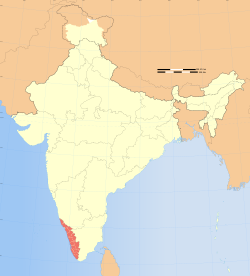
This was the winner of the 1997 Booker Prize. It is set in the Indian state of Kerala where they speak Malayalam. Befitting this palindromically named language, Estha(ppen) and Rahel, two egg twins, often speak words backwards. They way children see the world through different eyes, with innocence, is captured in the author's nursery rhyme approach to language and the repetition of certain words to capture misunderstood ideas.

The book starts with Rahel coming back to India to meet her twin brother Estha who has returned from where he was sent (to be with his abusive father). Estha has returned to the family home as an elective mute. Rahel watches him and explores the past. And we become aware of a great mystery in the past that is the secret reason why the twins are traumatised and dysfunctional. A secret that involves their Baby Grand Aunt.

Sophie Mol, the daughter of their jolly fat Uncle and his English wife, died on her short visit to their home when she and they were children. At the same time something happened to Velutha the Untouchable Odd Job man. Ammu, their mother, who tried to right whatever wrong was done, has died.

I read this story with a growing sense of dread. Something terrible has happened. Something awful. I wanted to know what had happened and I hoped that discovering the truth would set the twins free, but I feared that I would learn that they were guilty of terrible things. With deft dance steps the story moves around the truth, sometimes a little nearer, weaving a spell.

And the prose evokes the colour, the chaos, and the fecundity of India. And the characters are dazzlingly real, though mythic archetypes. And the narrative is hauntingly sad.

This was a book that I wanted to rush through to find out what had happened but I wanted to read slowly and savour every word because of the richness of the language.

Wonderful.

May 2011; 340 pages


This review was written by

the author of Motherdarling 

and The Kids of God