This is a Collins Gem book (less than pocket sized). It did not tell me much that was really interesting; a lot was obvious. If someone shuffles with their shoulders hunched they may feel depressed. It explained a lot of deliberate gestures and the cultural differences but what I was really after was to find those expressions, gestures and postures which betray what we are thinking when we are trying to lie. There was a short section about this near the end of the book but it wasn't enough.
March 2011; 192 pages
Thursday, 31 March 2011

"The Water's Edge" by Louise Tondeur
A young girl called Rice goes to stay with Beatrice and her daughter Esther in the Water's Edge hotel in Bournemouth after her single mother dies. As she comes to terms with bereavement and copes with puberty she learns to work in the hotel and forms a relationship with prickly Esther. We learn about the ghosts in the hotel that haunt wheelchair-bound, demented Grandma Maggie.
Tondeur beautifully evokes the naffness of the period. This isn't a hotel, it is a jumped-up guesthouse where the guests must choose their meals for the week when booking in and where the meals all come from tins (the staff have Proper Dinner afterwards). The girls smoke and hang around amusement arcades; Esther studies hairdressing and kisses boys; lesbians abound. Fathers don't.
Tondeur handles relationships well although she seems to avoid credible male characters. There is a lot of awkwardness. No-one is quite comfortable and the interplay of characters is well handled. But, presumably to provide a narration that could describe what no other character could see, she introduces the goddess Persephone who comes from Hell to stay in Bournemouth every spring (the mouth the Hades is underwater, just off the beach). Having a mythical goddess interwoven into the narration made this book very different but it seemed like a bolt on and I was never happy with it.
An interesting but uncomfortable read.
March 2011; 309 pages.
Saturday, 19 March 2011
"MacLean's Miscellany of Whisky" by Charles MacLean.
This quirky little book chronicles the authors love affair with whisky by providing essays, facts, snippets of doggerel (which Scots call poetry) and pictures. I learnt the author's views about which part of the process produces the taste (not the water, not the malting, not the peatfires, not the distilling but the years of maturing in second hand oak barrels that once contained bourbon, sherry, or wine). I learned the history of creating the famous brands and the way that the early advertisers tried to convince the drinking public that this disgusting potion was not the drink of low moonshiners but something for lairds by appealing to tradition and snobbishness. I discovered that whisky was once sold on draught from casks or stone jugs and only latterly bottled; the original bottles being owned by the customer and branded with a big circular seal to show the laird's coat of arms. I also learned some of the many names Scots give drunkenness.
Some of MacLean's learning seems suspect. He cheerfully derives the Scots word 'skelped' meaning both drunk and a blow to the head, from the Gaelic sgailc, a morning dram, although it almost certainly comes from 'scalped'. And on page 162 is something written by Robert Lindesay of Pitscottie in 1528/9 whilst on page 163 he tells us that the author was born in 1530.
However, the information about viscimetry, the way two liquids swhorl together as they mix, was fascinating as was the quote for Blake, Thro' a Glass Darkly.
March 2011; 241 pages
Tuesday, 8 March 2011
"Pitt the Elder: Man of War" by Edward Pearce
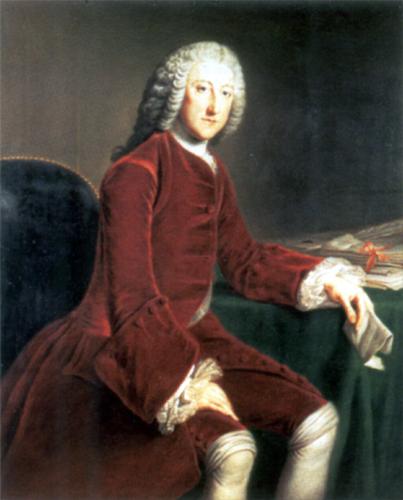
I didn't really enjoy this book. Pearce often tries to explain a situation by comparing it with a modern political situation. This is a brilliant idea. But often these explanations are obscure, at least to me and I am not the worst read member of the public, and so they serve just to emphasise the breadth of Pearce's scholarship.
March 2011; 346 pages
Saturday, 26 February 2011
"The Expelled; The Calmative; The End & First Love" by Samuel Beckett
These four 'novels' (anyone else would call them short stories) relate the story of a man outside society, a drop out, perhaps a tramp. He has a little independence but he is handicapped by his fears so that he cannot cope with life. Thus, when he walks and pays attention to the way he is walking, he falls down. When he perseveres he has to fling himself to the ground to avoid crushing a child although normally he wouldn't bother because he hates children. Hats feature prominently.
He writes beautifully. There are beautiful descriptions and tantalising metaphors. The hero is a man of mystery about whom we want to know more; we want to understand what has brought him to this pass. But these are just glimpses through a window and we will never know more than we are told. And that, in the end, is unsatisfying.
Feb 2011; 80 pages

Books and plays written by Nobel Laureates that I have reviewed in this blog include:
- Thomas Mann (1929) Death in Venice
- Hermann Hesse (1946) Steppenwolf and Demian
- Andre Gide (1947) The Immoralist and Strait is the Gate and The Vatican Cellars
- William Faulkner (1949) Sanctuary and As I Lay Dying
- Albert Camus (1957) The Plague and The Outsider and The Myth of Sisyphus and The Fall
- John Steinbeck (1962) Of Mice and Men and Cannery Row
- Samuel Beckett (1969) "The Expelled; The Calmative; The End & First Love" and "Waiting for Godot"
- Heinrich Boll (1972) The Train was on Time
- Saul Bellow (1976) "The Victim"
- Gabriel Garcia Marquez (1982) Chronicle of a Death Foretold
- Doris Lessing (2007) The Golden Notebook
- Patrick Modiano (2014) The Black Notebook
- Kazuo Ishiguro (2017) When We Were Orphans and The Buried Giant
"Sunset Park" by Paul Auster
Four damaged people squat in a derelict house in Sunset Park, New York. Good looking Miles, whom everyone fancies, is waiting for his girlfriend to become old enough to be legal. Haunted by the death of his step brother, he is hiding from his publisher father and his actress mother. So he's ordinary then. Ellen, reeling from an abortion, wants to be an artist and spends her time drawing erotic sketches copied from porn magazines. Big bear-like Bing, who frames prints and mends old fashioned stuff in his shop, the Hospital for Broken Things, poses in the nude for Ellen, masturbating for her before finishing himself off in her mouth. Alice is in the last stages of writing her dissertation about a post-WWII Hollywood film and breaking up with her boyfriend.
Four damaged characters undergoing the process of healing, just as the Hospital mends Broken Things.
A quirky novel which explores the way we humans, with our dreams and our sorrows, struggle against outrageous fortune, always losing as we age.
Feb 2011; 308 pages
Four damaged characters undergoing the process of healing, just as the Hospital mends Broken Things.
A quirky novel which explores the way we humans, with our dreams and our sorrows, struggle against outrageous fortune, always losing as we age.
Feb 2011; 308 pages

Tuesday, 22 February 2011
"Just my type" by Simon Garfield
It was a Christmas present. It arrived out of the blue. I made surprised and polite noises of gratitude.
But it was really interesting.
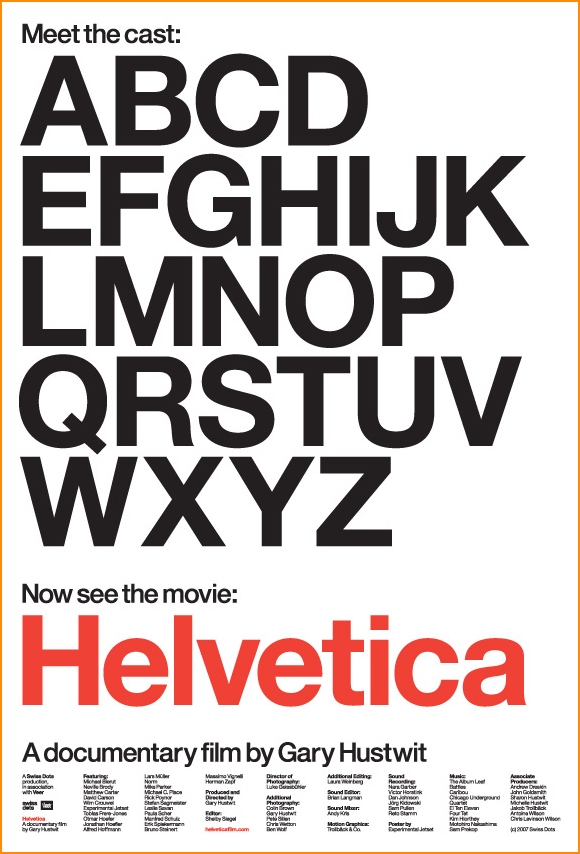
 I have never particularly noticed or thought about typefaces (not 'fonts'!) before except to be delighted by the Guradian's April 1st spoof about the island of San Seriffe (run by General Pica and inhabited by Flongs) and to use a different typeface (not 'font'!) for a friendly signature to a memo. But this book made me suddenly realise that typefaces are all around us. Like coins they are overlooked, miniature and everyday works of art.
And suddenly I discover what a ridiculously high cross piece the little e has in Times New Roman compared to the e in Arial. And I judge types by whether they have serifs or not. There are scripts and 3D and gothic and frenchified and ...
I was amazed at how enthralled I was (the last similar experience was when reading the book 'Salt'). It has almost literally opened my eyes. I would like to study fonts in more detail because it is still so hard to spot the differences between Times New Roman, Arial, Georgia, Helvetica, and Verdana to mention but a few. I would like to understand more about the bits that make up a letter, the serfi, the bowl, the loops, the diagonals; the book was rather lightweight on this aspect. But it also had fascinating stories about the weird people who become typographers and lots of trivia (who invented the dropped T on the Beatles drum kit?).
Surreally fascinating.
Feb 2011; 331 pages
But it was really interesting.
And suddenly I discover what a ridiculously high cross piece the little e has in Times New Roman compared to the e in Arial. And I judge types by whether they have serifs or not. There are scripts and 3D and gothic and frenchified and ...
I was amazed at how enthralled I was (the last similar experience was when reading the book 'Salt'). It has almost literally opened my eyes. I would like to study fonts in more detail because it is still so hard to spot the differences between Times New Roman, Arial, Georgia, Helvetica, and Verdana to mention but a few. I would like to understand more about the bits that make up a letter, the serfi, the bowl, the loops, the diagonals; the book was rather lightweight on this aspect. But it also had fascinating stories about the weird people who become typographers and lots of trivia (who invented the dropped T on the Beatles drum kit?).
Surreally fascinating.
Feb 2011; 331 pages
Saturday, 12 February 2011
"1421; the year China discovered the world" by Gavin Menzies
In 1421 a huge Ming fleet set out on a voyage of exploration. By the time they returned, the Ming foreign policy had done an about face and forbidden any further voyages. The records of the voyage were systematically destroyed.
Menzies believed that this fleet sailed round India and South Africa, across to the Cape Verde islands and down to Cape Horn. Some travelled through the Magellan straits and then doubled back to the Falkland and then across to Australia. Others went up the Chilean coast and to Mexico and California. Others travelled back north to the Caribbean, some eventually going to North America and circumnavigating Greenland (Menzies claims it was a hot year and the ice had melted).
They left maps of fantastic accuracy that were subsequently copied and taken to Europe. Dom Pedro, the brother of Henry the Navigator, took maps to Portugal where they were subsequently seen by Vasco da Gama, Diaz, and Columbus and his brother (the last then drawing a map which showed a much elongated South Africa suggesting that the voyage to the Spice Islands would be quicker travelling West than via the Portuguese route of round the Cape of Good Hope). These maps show Australia and parts of Antarctica with great accuracy; they show the Magellan straits before he got there (indeed he told his sailors that he had seen a map with the passage on before he got there); they show the Caribbean; they even show all of Greenland (the Vinland map).
Menzies claims that Columbus and Magellan and Cook were not great discoverers because they had already seen maps of where they were going.
He cites a lot of evidence including obelisks with writing on them in a Tamil script (I am not sure why he doesn't draw the obvious conclusion that Tamils put these there rather than that the Chinese did). He claims that the early European explorers discovered plants and animals that are native to China in the Americas. He interprets folklore of light-skinned or yellow-skinned people as recording Chinese visitors. He finds Chinese DNA and diseases in the Americas.
I wholeheartedly accept his evidence as showing that there were great voyages of exploration and trade with Australia and Africa and the Americas long before Columbus, da Gama and Diaz. Merchants will always seek new markets. Where I disagree is that all his evidence necessarily points to this one great fleet on their one great voyage. Why should there not have been trading links down to Australia and across the Pacific for centuries before 1421; why should not other nations such as the Indians and the Arabs not have made wonderful voyages? The maps are clearly records of travel.
Menzies believed that this fleet sailed round India and South Africa, across to the Cape Verde islands and down to Cape Horn. Some travelled through the Magellan straits and then doubled back to the Falkland and then across to Australia. Others went up the Chilean coast and to Mexico and California. Others travelled back north to the Caribbean, some eventually going to North America and circumnavigating Greenland (Menzies claims it was a hot year and the ice had melted).
Menzies claims that Columbus and Magellan and Cook were not great discoverers because they had already seen maps of where they were going.
He cites a lot of evidence including obelisks with writing on them in a Tamil script (I am not sure why he doesn't draw the obvious conclusion that Tamils put these there rather than that the Chinese did). He claims that the early European explorers discovered plants and animals that are native to China in the Americas. He interprets folklore of light-skinned or yellow-skinned people as recording Chinese visitors. He finds Chinese DNA and diseases in the Americas.
I wholeheartedly accept his evidence as showing that there were great voyages of exploration and trade with Australia and Africa and the Americas long before Columbus, da Gama and Diaz. Merchants will always seek new markets. Where I disagree is that all his evidence necessarily points to this one great fleet on their one great voyage. Why should there not have been trading links down to Australia and across the Pacific for centuries before 1421; why should not other nations such as the Indians and the Arabs not have made wonderful voyages? The maps are clearly records of travel.
Other books about exploration and explorers, and travel, that are reviewed in this blog, can be found here.

Thursday, 27 January 2011
"A week in December" by Sebastian Faulks
In London, in the week before Christmas 2007:
These intertwined lives (there are too many links to be dismissed a coincidence) illustrate the moral bankruptcy of a nation. Faulks laments (several times) his thesis that teachers have given up believing in knowledge and culture. His Moslem fundamentalist sees society through the pitiless eyes of youth: he sees the binge drinking, the pathetic fumblings for sex mistaken for love, the shoddy materialism. And yet his failures such as the tube driver and her barrister boyfriend, suggest that frail, little farting humans, with all our sad illusions, are the only really human people. That what we should fear is certainty: the certainty of Hassan and his Prophet and the certainty of the banker. God and Mammon. Are we a tube train, hurtling through the darkness to rest for a few fragile moments in the light and noise of a station? Or are we a cyclist without lights, making pedestrians leap aside. And in the end, what do we have except love?
This was an interesting book. It kept me reading. But it didn't have the magic of the best the Faulks can do.
January 2011; 390 pages
- a penniless barrister with a schizophrenic brother falls in love with a female tube driver who plays Parallax (second life);
- the Moslem son of a lime pickle manufacturer plans a suicide attack; his father is invested with an OBE
- a bitchy book reviewer waits to see whether he has won a literary prize
- a foreign footballer plays his first matches for his new London club
- and a ruthless hedge fund manager plans to profit from the collapse of a bank while his son smokes skunk
These intertwined lives (there are too many links to be dismissed a coincidence) illustrate the moral bankruptcy of a nation. Faulks laments (several times) his thesis that teachers have given up believing in knowledge and culture. His Moslem fundamentalist sees society through the pitiless eyes of youth: he sees the binge drinking, the pathetic fumblings for sex mistaken for love, the shoddy materialism. And yet his failures such as the tube driver and her barrister boyfriend, suggest that frail, little farting humans, with all our sad illusions, are the only really human people. That what we should fear is certainty: the certainty of Hassan and his Prophet and the certainty of the banker. God and Mammon. Are we a tube train, hurtling through the darkness to rest for a few fragile moments in the light and noise of a station? Or are we a cyclist without lights, making pedestrians leap aside. And in the end, what do we have except love?
This was an interesting book. It kept me reading. But it didn't have the magic of the best the Faulks can do.
January 2011; 390 pages
"The book of general ignorance" by John Lloyd
This book , from the QI programme, debunks many accepted 'facts': who said, let them eat cake? when did the last survivor of the Crimean War die? (2004, it was a tortoise); who was born by Immaculate Conception? (Mary); How many sheep were thee on Noah's Ark? (14). It then proceeds to give acres of utterly trivial but wonderfully fascinating information.
My favourite is about 'Here we go gathering nuts in May'. Nuts don't grow in May; it is too early. The song should be 'Here we go gathering Knots of May' referring to the May (hawthorn) tree that blossoms in mid-May but, until the Gregorian calendar change, blossomed on May day. May flowers give off triethylamine which is the same chemical as that first emitted by dead human bodies which is probably why May flowers inside a house are thought to be unlucky. On the other hand triethylamine is also what gives semen its distinctive smell which is probably why the May tree is a fertility symbol (not just the phallic May pole).
See? Wonderful facts. Exactly my sort of book. Brilliant!
Jan 2011; 281 pages
Sunday, 16 January 2011
"The Black Swan" by Nassim Nicholas Taleb
The author of this book got up my nose from the start when in the Prologue he describes the probability estimates of a risk manager as having "no better predictive value for assessing the total risks than astrology". Which is clearly wrong. Maybe the predictions of the risk manager are imperfect but they are almost certainly better than astrology.
Taleb tends to over-argue his case and he is rhetorically rude about people who have a different point of view (which prompts my in-built bullshit detectors to suggest that he hasn't got a case). He describes people who live normal lives as "dull" and says they live in "Mediocristan"; "their minds are closed". Teachers and academics have him spitting dust. "Only military people deal with randomness with genuine, introspective intellectual honesty."
The insults become far worse and far more frequent towards the end of the book. He really doesn't like statisticians, claiming that their entire disciplines are rubbish and that they are closed minded idiots. Most other academics are similarly rubbished. His ad hominem remarks include their dress sense. When someone gets so angry and so personal I always suspect that their arguments are inadequate.
So as a teacher and academic I tried very hard to keep an open mind but as a human I found it very difficult. What are his arguments?
Firstly, their is the problem of induction. He clearly quite likes David Hume. He describes it thus (borrowing an example from Bertrand Russell; Taleb uses intellectuals when he wants to): if a turkey has been fed every day for a thousand days it will probably assume that it will always be fed when in fact the next day it is to be killed. I would suggest that the problem of induction is not so much that we are not aware that recurring examples do not lead to proof but that it would be ridiculous for the turkey to be surprised at being fed on the 998th and 999th days. So there has to be trust in induction whilst at the same time being sceptical. If you were a turkey and you had to bet what what would happen on day 1000 it would make sense to bet on being fed.
The second problem is that of hindsight; he quotes, amongst other examples, the Anthropic Principle. He also quotes Cicero who gives an example of an irreligious man being told of sailors who had prayed and not drowned, and asking about the sailors who prayed and still drowned. Thus the Earth seems a planet perfectly tailored for the evolution of mankind because had it been any different we would not have evolved and therefore would not be here to admire its tailoring (or we would be somehow different and thus be admiring the tailoring that led to the new different us). Another lovely example is that of gamblers most of whom believe in beginner's luck because of their own personal experiences; because, claims Taleb, the gamblers who lost on their first gambles got disenchanted and never became gamblers.
So I admit that these are fallacies that mean that we can never absolutely trust what is to happen but I still cling to the idea that both these fallacies give a pretty good approximation of what is likely to happen.
In the latter part of the book I think his main point is that Gaussian bell curves do not work in financial markets. The evidence for this is the existence of Black Swan events on a frequency that is significantly greater than the Gaussian predictions. I do not disagree with him. Gaussian bell curves work brilliantly on probability distributions characterised by true randomness, that is where one throw of the die does not affect the next. However, in situations where there is feedback, such as with earthquakes, fashions and money markets, Mandelbrotian fractal power distributions seem to work much better. This is still not perfect, as NNT points out you still base your models on historical data so there is always the possibility of something utterly novel happening in the future which you can't predict, but this is surely the best we can do.
But this is all explained much better in Ubiquity by Mark Buchanan and Critical Mass by Philip Ball. And these authors do not spend page after page rudely rubbishing their opponents with the most angry and arrogant invective. NNT does not seem to realise that Gaussian statistics are utterly valid and really useful in their sphere. He does not seem to realise why his particular context is different. But he does seem to believe that he is indubitably correct, there is no room for self-doubt whatsoever, which in a book about the limits of our ability to know is really rather ironic.
There was one concept that gave me pause for thought. He is talking about scalability, which for him is the idea that sometimes the winner takes all. Thus a best selling author doesn't need to put any extra work in once his book has hit the shops but he reaps the reward; another author will have to keep working on the day job. Scalability applies to authors, move stars, bankers etc. Some scientists work all their lives in hop of a big breakthrough, sustaining endless disappointment with hope that one day they will find a cure for cancer. Dentists, on the other hand, work every day for reasonable reward. NNT clearly thinks the former lifestyle is better (if you strike lucky) and maybe it is what I should have done. Next life perhaps!
There are some good ideas in this book though none are original. Nevertheless, in essence he is right. But he does not have the monopoly on truth and the people he is so rude about are also developing truths in different contexts. I prefer an author who presents his ideas more concisely; in the Black Swan the ideas are padded out with an awful lot of rudeness.
Jan 2011; 300 pages
Sunday, 9 January 2011
"The Ghost" by Robert Harris
A writer is hired to ghost the memoirs of ex-Prime Minister Adam Lang following the mysterious death of the original writer, Lang's long time ADC. He flies out to a wintry Martha's Vineyard and into a household, beleaguered by political accusations, isolated, and turning in on itself.
For the first half of the book nothing really happens. There is a sense of mystery but the interest is mostly held as the writer explains the craft of the ghost. This first part is superbly crafted and beautifully described, but a bit slow. Suddenly it changes gear. It becomes faster and more exciting, although considerably more shallow. There is the obligatory one night stand. There are the nagging doubts: would an ex-British Foreign Secretary, now ambassador at the UN, really have the contacts necessary to hire an ex-NYPD cop as a covert operative?
Nevertheless, the book in its entirety is a well crafted political thriller with a little more about it than most.
January 2011; 310 pages
Saturday, 8 January 2011
"Faustus" by Leo Ruickbie
In this readable yet authoritative text Ruickbie tries to reconstruct the life of Faustus (who isn't actually called Faustus) from the seven or so contemporary references that actually seem reasonably straightforward and therefore genuine. Most of them say little more than 'I saw Faustus' and not one mentions the pact with the devil. Mephistopheles himself is a new demon first mentioned in the Faust legend and the derivation of the name
As well as eking out the story (and from time to time mentioned the legend) Ruickbie details the sometimes fascinating background of a Holy Roman Empire trapped between the powers of France and the Ottomans, eternally feuding with itself about both who is going to be the next Emperor, whether the Emperor or the Pope should be top dog, and the nascent stirrings of Lutherism, Protestantism and the Reformation.
Quite heavy going but sometimes a fantastic read.
January 2011; 226 pages
Subscribe to:
Posts (Atom)