Showing posts with label Russian. Show all posts

Thursday, 8 May 2025

"White Nights" by Fyodor Dostoevsky


An incredibly lonely young man meets a manipulative woman in a story filled with ambiguities, contradictions and half-turhs.

 A short story rather than a novel; nevertheless I regard it worthy of a blog entry in its own right. It is Dostoevsky after all. And absolutely jam-packed with interest.

It is subtitled: “A sentimental story from the diary of a dreamer.

Plot with spoilers.

The unnamed narrator is a very lonely man, so lonely that he talks to houses. His awkward manners have driven away any friends he might have had. He regards the people he sees every day on the street as his friends, although he can never summon up the courage to talk to them. As a result, They, of course, do not know me, but I know them.” Even his emotions are controlled by others: if the people he ‘knows’ are smiling he feels happy etc. 

But in this season of 'white nights' (June 11th to July 2nd when there is twilight at midnight because St Petersburg is so close to the Arctic Circle) people are starting to go off to their summer estates so he's missing even these familiar faces and he feels lonelier still.

So lonely that he even anthopomorphises the houses he passes in the street. He imagines one “cute rosy-pink” (and feminine) being painted yellow [which was the colour of lunatic asylums] thus being defiled by barbarians. Is this some sort of rape fantasy; does it imply a patriarchal assumption that a ‘used’ woman is defiled? There's something creepy about his loneliness.

He's also, by his own account, inexperienced with women. “I am a complete stranger to women. ... I am twenty-six and I have never seen any one” though he later qualifies this by saying that he has met two or three landladies [I presume they are lower class so they don’t count; I wasn't sure whether he is a virgin because in those days sex with prostitutes didn't necessarily count]. 

He encounters a girl weeping on the embankment. He passes by, unable to speak, until a drunk chases her and he runs after then to save her from being insulted. The ice broken, he walks her home and begs to meet again the following night. He's so lonely he has fallen in love at once - he tells her “I shall be dreaming of you all night, a whole week, a whole year.” This behaviour might today be seen as a bit stalkerish.

The second night, she asks to know his 'history'. He grows alarmed: "Who has told you I have a history? I have no history. ... I have lived ... keeping myself to myself, that is, utterly alone.” He then goes into a long speech which reveals almost nothing of his 'history' (he doesn't even tell her his name). Instead, he calls himself “a type ... an original ... an absurd person ... a dreamer” and this initiates a long speech full of passion and long paragraphs that reminded me of the character of the Underground Man in Dostoevsky's Notes from Underground

She then tells him her 'history'; she too has a highly-restricted social life being (literally) pinned to the skirt of her grandmother in the evenings. Nevertheless she has got a boyfriend who has promised to marry her when he gets back from a year making money in Moscow. However, the year is over and he hasn't returned. The narrator suggests she writes a letter but she already has and she asks him to deliver it which sounds a bit manipulative to me.

By the fourth night when the boyfriend still hasn't shown up she decides to dump him and the narrator professes his love for her and she accepts. They make plans to marry. But as they return to her home, the ex-boyfriend turns up and she goes back to him.

The next day, alone again with his landlady, he imagines growing old, a lonely man. 

Style
The opening line is: “It was a wonderful night, such a night as is only possible when we are young, dear reader.” The concept is that these are extracts from a diary, but right from the start, Dostoevsky directly addresses the reader in the character of the narrator.

Ambiguity is built into the dialogue through the repeated use of ellipses. This reminded me of how the dialogues in The Turn of the Screw by Henry James frequently used this device to enable to Governess to make assumptions about the motivations of the other characters.

Unreliability is also an integral part of the story. For example, on the third night the narrator tells us “she has not come” when he arrives at their rendezvous and then, after meeting her, "she arrived a whole hour before I did.” Much of what Nastenka says is either manifestly untrue (she can't always be pinned to her grandmother since she is able to meet the narrator on the embankment four nights in a row) or self-contradictory. 

And there's a lot that isn't said. The narrator never tells us his name and gives us very little of his history. Nastenka refuses to specify the "pranks" that got her into trouble when she was fifteen.

Characters:
The narrator-protagonist is unnamed. He calls himself a dreamer. He is socially awkward, interacting so badly with those who try to befriend him that he drives them away. As a result he is lonely. He is too shy to initiate conversations and when chance in the shape of an alpha male who tries to assault a weeping young girl leads to an encounter, he almost instantly and rather creepily falls in love with her. He is passionate and unrestrained and self-obsessed and emotionally crippled and perhaps unreliable and lying to us. 

Nastenka, the young girl. At first sight she is also emotionally crippled, being (literally) pinned to her blind grandmother's dress. Nevertheless, she has rebelled. When she was fifteen she “got into mischief; what I did I won't tell you; it's enough to say that it wasn't very important.” As a result, she has been effectively imprisoned at home. But this can't be true because she has no problem meeting the narrator on four consecutive nights. She's a liar. She's also a manipulator. When the narrator urges her to write a letter to her boyfriend, it appears she has already written one which she wants him to deliver. She teases him along - even when they are waiting to together to meet her ex on the 3rd night, she takes the narrator's hand because, she tells him, she wants her boyfriend to see how fond she and the narrator are of one another; when, also on the 3rd night, they decide that the ex isn't coming she tells the narrator: “We shall always be together shan’t we?” and he thinks “Oh, Nastenka, Nastenka! If only you knew how lonely I am now!” - and when on the fourth night he finally confesses his love for her she acts surprised but she is clearly pretending: “I knew you loved me long ago, only I always thought that you simply liked me very much.” In the end, when she decides that she has been dumped by her ex, she almost immediately settles for second-best in the form of the narrator ... and then dumps him with alacrity when the ex turns up. She still wants to string him along, telling him in a letter he receives on the morning after the fourth night: “You have forgiven me, haven’t you? You love me as before? ... You will like him, won’t you?” Talk about eating your cake and still wanting to have it! I reckon the narrator has had a lucky escape.

Nastenka's grandmother is blind and has hitherto strictly controlled Nastenka, She was concerned that the lodger with whom Nastenka does fall in love is "youngish" and "pleasant-looking" (according to Nastenka). Nevertheless, towards the end of the story she is looking for a new lodger and she seeks an eligible young man because she wants to get Nastenka married off. 

Matrona, the narrator's landlady, is described as “always thoughtful and depressed” in the Second Night and she isn’t bothered about the spiders’ webs in his room, but by the last section (Morning) she has cleaned the place so that, as she says, “you can have a wedding here”. She seems to mimic the narrator, starting as a dreamer and later becoming actively involved. At then end, when he imagines growing old, it is her he sees. 

Cultural references:
During the narrator's long impassioned speech during the second night, he lists a number of things of which he dreams:
  • Friendship with Hoffmann”. I presume this is E T A Hoffmann, a leading romantic writer in the 19th century, whose stories formed the basis for Offenbach’s opera ‘Tales from Hoffmann’, and one of whose short stories inspired Tchaikobsky’s Nutcracker suite
  • St Bartholomew’s Night” Does this refer to the St Bartholomew's day massacre in France?
  • Diana Vernon” who is a character in Walter Scott’s Rob Roy
  • Playing the hero at the taking of Kazan by Ivan Vassilyevich” Ivan Vassilyevich is the tsar better known as Ivan IV 'the Terrible'. He besieged and captured Kazan in 1552, massacring the mainly Tatar population and putting an end to the Khanate of Kazan which was incorporated into the Russian Empire.
  • Clara Mowbray” is the heroine of another Waverley novel by Sir Walter Scott, this one called St Ronan’s Well.
  • Effie Deans” is yet another Scott heroine, this time from The Heart of Midlothian. At the start of the novel she is in prison for child murder. After her half-sister Jeanie walks all the way to London to secure a royal pardon for her, Effie flees with her lover. Years later she visits Jeanie as ‘Lady Staunton’ and explains to Jeanie “I am a liar of fifteen years standing”. Is she the model of another mendacious woman?
  • The council of prelates and Huss before them”. Jan Hus, a Czech theologian and proto-Protestant, was convicted of heresy at a church council which he attended after being given a safe-conduct; he was burnt at the stake.
  • The rising of the dead in ‘Robert the Devil’”. This is a chorus from act 3 of the opera Robert le diable by Meyerbeer
  • Minna and Brenda” are characters in ‘The Pirate’ by - guess! - Walter Scott
  • The battle of Berezina” was an action of 1812 in which the Russians failed to destroy the retreating French under Napoleon as they crossed the river of Berezina. 
  • Danton” is, I presume, the French revolutionary
  • Cleopatra ei suoi amante” is Cleopatra and her lover. Another doomed love affair.
  • A little house in Kolomna”. Kolomna is the name of the district in St Petersburg where Dostoevsky lived for a while.
Nastenka also has read the entire oeuvre of Sir Walter Scott (her favourite is Ivanhoe). She has also read Pushkin. Her granny refuses to let her read French novels.

The lodger-boyfriend takes her and granny to the opera, starting with The Barber of Seville by Rossini. This involves a woman (Rosina) who is kept secluded by her guardian (because he wants her dowry, does Nastenka's granny have a financial motive to her holding on to Nastenka?). Count Almavira wants to marry Rosina and to gain access to her disguises himself as first a poor student, then a drunken soldier and then a singing teacher. Rosina at one moment agrees to marry her guardian but is later persuaded to marry the Count, so another example of a flip-flopping woman. The 'Barber' himself is Figaro (Mozart's opera, the Marriage of Figaro, is based on the sequel which was regarded as subversive to the point of seditious when it was written). 

Questions I still haven't answered:
  1. Why is the narrator anonymous? (And ‘the lodger’)
  2. Is the narrator reliable? To what extent can we trust what he says?
  3. Is Nastenka manipulating him? He tells her to write a letter to the lodger ... and she already has it written!
  4. In the first part, is NP really a rather sinister stalker?
  5. Does NP actually post the letter to the lodger? He offers to be an intermediary but is this so that he can keep the lovers apart?

Selected quotes:

  • In these corners ... quite a different life is lived, quite unlike the life that is surging round us, but such as perhaps exists in some unknown realm, not among us in our serious, over-serious, time. Well, that life is a mixture of something purely fantastic, fervently ideal, with something ... dingily prosaic and ordinary, not to say incredibly vulgar.” (2nd night)
  • The dreamer ... is not a human being, but a creature of an intermediate sort. For the most part he settles in some inaccessible corner, as though hiding from the light of day; once he slips into his corner, he grows to it like a snail. ... Why do you suppose he is so fun of his four walls, which are invariably painted green, grimy, dismal and reeking unpardonably of tobacco smoke? Why is it that when this absurd gentleman is visited by one of his few acquaintances (and he ends by getting rid of all his friends), why does this absurd person meet him with such embarrassment, changing countenance and overcome with confusion, as though he had only just committed some crime within his four walls?” (2nd night)
  • He cannot himself remember what he was dreaming. But a vague sensation faintly stirs his heart and sets it aching, some new desire temptingly tickles and excites his fancy, and imperceptibly evokes a swarm of fresh phantoms. Stillness reigns in the little room; imagination is fostered by solitude and idleness; it is faintly smouldering, faintly simmering, like the water with which old Matrona is making her coffee.” (2nd night)
  • Today was a gloomy, rainy day without a glimmer of sunlight, like the old age before me.” (3rd night)
  • "Why is it that even the best of men always seem to hide something from other people?” (3rd night)
  • My God, how it has all ended! What it has all ended in!” (4th night)
  • I saw myself just as I was now, fifteen years hence, older, in the same room, just as solitary.” (Morning)
  • My God, a whole moment of happiness! Is that too little for the whole of a man’s life?” (Morning)

Novels by Dostoevsky reviewed in this blog:

Originally published in Russian in 1848

I read a translation into English, part of 'Greatest Short Stories of Dostoevsky' published by Fingerprint in paperback in 2025



This review was written by

the author of Bally and Bro, Motherdarling 

and The Kids of God

Tuesday, 6 February 2024

"The Brothers Karamazov" by Fyodor Dostoevsky

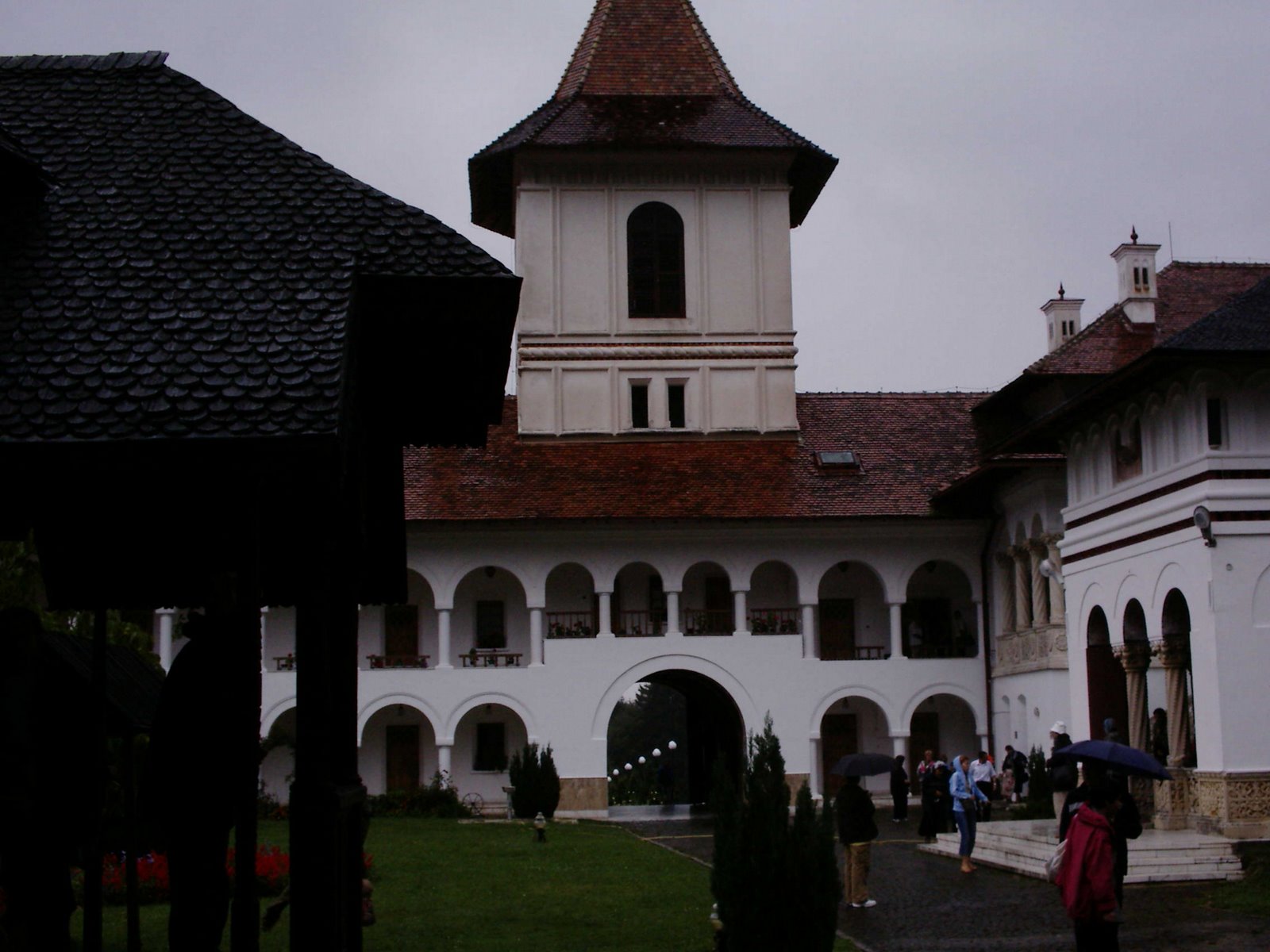
An orthodox monastery (though in Romania, not Russia)

This is a huge and complex book and it seems impossible to summarise it in a review. These are my preliminary impressions.

The size of the book
On first impressions, it is dauntingly big. Dostoevsky liked words and never used one when a dozen were available. It could have been shorter. And we must bear in mind what E M Forster, in Appendix A of Aspects of the Novel, says: “Long books, when read, are usually overpraised, because the reader wishes to convince others and himself that he has not wasted his time.” But, on the other hand, The Brothers Karamazov is often thought to be Dostoevsky’s masterpiece and is generally regarded as a classic of Russian literature. I suspect that is because it endeavours to do so many things.

A murder mystery?
The plot revolves around the murder of a rich old man, Fyodor Karamazov and the subsequent arrest and trial of one of his sons, Dmitry. It was said to have been inspired by a real case involving a man Dostoevsky knew when he was in exile in Siberia; this man was wrongfully convicted and subsequently exonerated of parricide.

It’s not a murder mystery in the conventional sense in that there are only two suspects, Dmitry and the villainous Smerdyakov, and the reader is pretty certain whodunnit. But it follows other tropes almost perfectly. Before the crime, Smerdyakov explains to Ivan, the middle brother, how it can be committed. When Dmitry is in the garden of his father’s house at night, clutching a weapon, there is a pause in the action ... and then he is fleeing the scene and being accused of parricide by an old servant whom he strikes. After the crime, there is a police investigation and the evidence is thoroughly dissected. The novel ends in a courtroom drama. This is classic stuff.

A retelling of the myth of Oedipus?
In some ways Dostoevsky’s story is a retelling of the Oedipus myth. Dmitry was abandoned by his father when he was very young and brought up initially by a servant and then a rich relative far away, as Oedipus was abandoned by Laertes, and taken in by poor folk and subsequently a foreign king. (At Dimitry’s trial the Defence Counsel makes much of this, suggesting that fatherhood is a two-way thing and therefore that this murder can’t be called parricide.) Oedipus accidentally marries his mother; Dmitry is in love with Grushenska, a woman also wooed by his father. So there are links. And Ivan the middle brother also harbours murderous thoughts towards his father, exclaiming (at Dmitry’s trial): “Who does not desire the death of his father?” (12.5) And the alternative suspect for the murder is allegedly the illegitimate son of Fyodor (a bit of a nineteenth-century cliche: always blame the bastard). So TBK has plenty for Freud to get his teeth into.

A romantic farce?
Not only are Dmitry and his father wooing the same woman, Grushenska, but Dmitry is already engaged to Katerina who, in turn, loves and is loved by Dmitry’s brother Ivan (sibling rivalry?). Grushenka is a notorious woman, having an old merchant ‘protector’ and having been ‘dishonoured’ when she was young by a Polish officer after whom she still secretly hankers. Ratikin is courting (for her money) Mrs Khakhlakov but she fancies Perkhotin.

A theological debate
If there is a hero, it is Alyosha, the third and youngest legitimate brother. At the start of the book, he is a monk in the local monastery but he spends an awful lot of his time visiting various different people around the town and therefore acting as a sort of thread binding the story together (although the principal narrator is an anonymous monk living in the monastery).

One of the major subplots involves Alyosha’s mentor at the monastery, the Elder Zosima, a sort of wise guru whose sayings and prophecies are suitable gnomic but whose reputation as a holy man takes a severe knock after he dies and his body goes putrid and smells (the body of a saint is supposedly incorruptible). Another subplot involves Alyosha effecting a reconciliation between warring schoolboys.

His elder brother, Ivan, is an academic and an atheist who has recently published an infamous article which suggests that if there is no God, then everything is lawful. His atheism isn’t absolute. He entertains the possibility of there being a God, but he finds it difficult to believe that this world is that created by God. The root of his disbelief stems from the fact that children suffer and this cannot be reconciled with the idea that compassion is at the heart of Christianity. Ivan is the focus of the theological debates in the book. He is the one who makes up the tale of the Grand Inquisitor which is perhaps the most famous part of the book: Jesus appears in fifteenth century Spain and is arrested and interrogated by the Grand Inquisitor who explains why giving mankind free will was a mistake. Ivan also hallucinates a conversation with the devil.

A book about redemption?
Dmitry realises that the only way he will reform is by spending twenty years in the Siberian mines and therefore he seems to believe that he possesses a nugget of redeemable character. Is this Dostoevsky suggesting that purgatory is the place where souls are redeemed on their way to paradise?

A prematurely postmodern psychological novel
Dostoevsky seems to me to be way ahead of his time in his understanding that people are inconsistent. To take a trivial example: a young girl called Lise (later called Liza) writes a love letter to Alyosha which she then repudiates, telling him it was a silly joke and then repudiates the repudiation, saying she loves him after all.

Dmitry is a more important example. He is a libertine and by his own (frequent) admission a scoundrel but he has a fine sense of honour and he insists he is not a thief. When he has money he splurges it and yet he keeps 1,500 roubles sewn into a bag around his neck. He gets drunk and enjoys women and yet at the same time he is desperately in love with Grushenska. The straight and narrow road is not for him: “I always liked side‐paths, little dark back‐alleys behind the main road—there one finds adventures and surprises, and precious metal in the dirt. I am speaking figuratively, brother. In the town I was in, there were no such back‐alleys in the literal sense, but morally there were. If you were like me, you’d know what that means. I loved vice, I loved the ignominy of vice.” (3.4)

Perhaps the most fascinatingly complex character is Kolya. He’s a clever schoolboy and he knows it. He’s vain but sufficiently self-aware to know when he is being boastful. He has rudimentary ideas of socialism and likes talking to the people but he is very patronising when he does. His school fellows admire him as a daredevil because of some of his pranks but he finds it a strain keeping this reputation up. He has a tender heart and is very fond of some young children whom he occasionally babysits. He hates his own name (Nikolay). He talks to Alyosha on equal terms (he calls him ‘Karamazov’) but he knows that Alyosha somehow sees Kolya’s naked soul.

Not all the characters are multi-dimensional. Fyodor Karamzov, the father, enjoys being a sensualist, he boasts about it. He explains to Alyosha why he needs his money: “As I get older, you know, I shan’t be a pretty object. The wenches won’t come to me of their own accord, so I shall want my money. So I am saving up more and more, simply for myself .... For I mean to go on in my sins to the end, let me tell you. For sin is sweet; all abuse it, but all men live in it, only others do it on the sly, and I openly. And so all the other sinners fall upon me for being so open. And your paradise, Alexey Fyodorovitch, is not to my taste, let me tell you that; and it’s not the proper place for a gentleman.” (4.2) At the start of the book Dostoevsky suggests that Fyodor accumulated his wealth by sponging, so that everyone always underestimated how rich he was, he also indulges in sharp practices (marrying for money and effectively cheating Dmitry out of his mother’s inheritance); by the time of the action of the novel, however, Fyodor has a reputation for being a rich voluptuary. Is this an inconsistency in the story or is Dostoevsky showing that even when a character is consistent, their reputation can be multi-faceted.

At the end of the book, at the trial, both Prosecutor and Defence Counsel interpret the actions of Dmitry in different ways: as the Defence says “psychology, gentlemen, though it is a deep thing, none the less resembles a stick with two ends” (12.10). It is pointed out that the lawyers are constructing competing stories. It is as if Dostoevsky is saying that there is no absolute truth but that all versions of reality are unreliable narrations, a very postmodern idea.

The unreliable narrator is also a trope of modernist fiction, so perhaps TBK is an early example of that. The ending of the book, which is only partially resolved, is another characteristic of modernism. 

Characters
In the end, the joy of TBK lies in some of the characters. Although I found Alyosha rather empty and bland and Smerdyakov is a purely pantomime villain, other characters are fascinating. My favourites were Mrs Khokhlakov, a wonderfully empty-headed widow, and the brilliant but vain but compassionate Kolya. At the other end of the age spectrum, who doesn't love an unredeeemed rake who takes joy in his wickedness, such as Fyodor Karamzov?

But perhaps the most interesting character is Ratikin. At the start he is almost unnoticeable, the seminarian in the background. But little by little he worms his way into the plot until he is a cross between a secret policeman and an agent provocateur. He is a spy for Mrs K. He takes money from Grushenska to bring Alyosha to her. He pops up everywhere! “It turned out that Ratikin knew everything, knew an extraordinary amount, had been to visit everyone, seen everything, spoken to everyone, and possessed a most detailed knowledge.” (12.2) Is he Dostoevsky's cynical self-portrait, like Velasquez in his Las Meninas? He writes slanderous articles (betraying Mrs K) for the Moscow press when the scandal of the murder breaks. Dmitry even says “He wants to write about me ... and thus inaugurate his role in literature.” (11.4) 

What I didn’t like
As with so many Russian novels, each character has three names: the first name, the patronymic and the surname. They are referred to either by first name and patronymic (eg Fyodor Pavolich) or by surname (eg Karamazov) or, most frequently, by a version of their first name (eg Alyosha, Mitya, Katya, etc). Some characters have more than one such nickname (often different people call them different things and this is a highlight of the book). In some cases we don’t learn the full name of a character until very late on in the book. This caused me considerable confusion at the start, not realising, for example, that Grushenska was also called Agrafena Alexandrovna. I really needed a cast list at the start of the book which listed all possible versions of their name.

The edition I had came with notes which often explained things that I wasn’t very interested in, such as the fact that a certain line was derived from a parody of Pushkin. What I absolutely needed was a translation of the many times that French or Latin was used. In the worst example, the devil tells a joke in French. There is an end-note ... which gives the full joke, still in French, and fails to translate it! Why do editors do this? I’m reading a translation ... but they can’t be bothered to translate anything that’s not Russian. Is it because they don’t know? Or is it because they do know and they expect me to know? Or is it because they do know and they know I don’t know and it is a way of asserting their superiority?

The implication that Smerdyakov was a rotter principally because he illegitimate. All of Fyodor Karamazov's sons get a rough start in life but poor old Smerdy is bullied and looked down on by everyone. The whole Russian economy depends on the peasants but, despite Dostoevsky's reputation as a revolutionary social reformer, his books are basically about the upper-classes, who are presumed, even when they are ill-educated and poverty-stricken, to be intrinsically nobler and worthier and better than the muzhiks. 

All those exclamation marks! There's only so much intensity that one can take. Dmitry lives his life in the fast lane, always seemingly on the edge of catastrophe, and Ivan seems perpetually on the brink of a nervous breakdown. Alyosha spends his time running from one crisis to another. It's like watching Macbeth when everyone shouts every line, or a ballet when the dancers never pause. Exhausting! The occasional funny bits, such as when Mrs K tries to interest Dmitri in gold mines, are a welcome relief. 

The narrative was somewhat lumpy. Two whole books (6 and 10) were almost extraneous additions. Book 6 tells of the life and works of the Elder Zosima and is almost completely irrelevant to the plot. Book 10 introduces a new character and acts as an interlude between Dmitry's arrest and his trial.

And, while I appreciate that every character needs a back story, does every character need that back-story told? I suppose these sometimes provided welcome breaks from the intensity of the action but I really didn't need to know, for example, why Zosima became a monk.

Evaluation
Yes it is much too long. There were passages of intricate theological and legal argument when I was numb with weariness. But even an inadequate review like the one above must give some idea of the wealth that is in this book. A classic? Undoubtedly.

Selected quotes:
  • The more I love mankind in general, the less I love human beings in particular. ... In the space of a day and a night I am capable of coming to hate even the best of human beings: one because he takes too long over dinner, another because he has a cold and is perpetually blowing his nose.” (2.4)
  • All these deportations to forced labour, ... reform no one, and more importantly have no deterrent effect, either.” (2.5)
  • It had rats, but Fyodor Pavlovitch did not altogether dislike them. ‘They help to relieve the monotony when one’s alone in the evening,’ he used to say.” (3.1)
  • But I always liked side‐paths, little dark back‐alleys behind the main road—there one finds adventures and surprises, and precious metal in the dirt. I am speaking figuratively, brother. In the town I was in, there were no such back‐alleys in the literal sense, but morally there were. If you were like me, you’d know what that means. I loved vice, I loved the ignominy of vice.” (3.4)
  • The ladder’s the same. I’m at the bottom step, and you’re above, somewhere about the thirteenth. That’s how I see it. But it’s all the same. Absolutely the same in kind. Anyone on the bottom step is bound to go up to the top one.” (3.4)
  • As I get older, you know, I shan’t be a pretty object. The wenches won’t come to me of their own accord, so I shall want my money. So I am saving up more and more, simply for myself,.... For I mean to go on in my sins to the end, let me tell you. For sin is sweet; all abuse it, but all men live in it, only others do it on the sly, and I openly. And so all the other sinners fall upon me for being so open. And your paradise, Alexey Fyodorovitch, is not to my taste, let me tell you that; and it’s not the proper place for a gentleman.” (4.2)
  • Even in these days the law does not allow you to drag your old father about by the hair, to kick him in the face in his own house, and brag of murdering him.” (4.2)
  • In schools, children are a tribe without mercy: on their own they are heaven’s own angels, but together, especially in schools, they are often merciless.” (4.7)
  • The very kindest and best of men are those who are most drunk.” (4.7)
  • "If I didn’t believe in life, if I lost faith in the woman I love, lost faith in the order of things, were convinced in fact that everything is a disorderly, damnable, and perhaps devil‐ridden chaos, if I were struck by every horror of man’s disillusionment—still I should want to live and, having once tasted of the cup, I would not turn away from it till I had drained it! At thirty, though, I shall be sure to leave the cup, even if I’ve not emptied it, and turn away—where I don’t know. But till I am thirty, I know that my youth will triumph over everything—every disillusionment, every disgust with life. I’ve asked myself many times whether there is in the world any despair that would overcome this frantic and perhaps unseemly thirst for life in me, and I’ve come to the conclusion that there isn’t, that is till I am thirty, and then I shall lose it of myself, I fancy. Some drivelling consumptive moralists—and poets especially—often call that thirst for life base. It’s a feature of the Karamazovs, it’s true, that thirst for life regardless of everything; you have it no doubt too, but why is it base? The centripetal force on our planet is still fearfully strong, Alyosha. I have a longing for life, and I go on living in spite of logic.” (5.3)
  • And so Our Lady, shocked and weeping, falls before the throne of God and begs for mercy for all in hell—for all she has seen there, indiscriminately.” (5.5)
  • We had four servants, all serfs. I remember my mother selling one of the four, the cook Afimya, who was lame and elderly, for sixty paper roubles, and hiring a free servant to take her place.” (6.1)
  • Much knowledge soon makes one old.” (7.3)
  • He felt unbearably awkward. All were clothed, while he was naked, and strange to say, when he was undressed he felt somehow guilty in their presence, and was almost ready to believe himself that he was inferior to them, and that now they had a perfect right to despise him.” (9.6)
  • I have, as it were, torn my soul in half before you, and you have taken advantage of it and are rummaging with your fingers in both halves along the torn place.” (9.7)
  • I’ve sworn to amend, and every day I’ve done the same filthy things. I understand now that such men as I need a blow, a blow of destiny to catch them as with a noose, and bind them by a force from without. Never, never should I have risen of myself! But the thunderbolt has fallen. I accept the torture of accusation, and my public shame, I want to suffer and by suffering I shall be purified. Perhaps I shall be purified, gentlemen?” (9.9)
  • The study of the classics, if you ask my opinion, is a police measure, that’s why it has been introduced into our schools. Latin and Greek were introduced because they are a bore and because they stupefy the intellect. It was dull before, so what could they do to make things duller? It was senseless enough before, so what could they do to make it more senseless? So they thought of Greek and Latin.” (10.5)
  • Everything will change , and finally, nothing, they will all be old men staring into their coffins.” (11.2)
  • Everyone says they hate immorality, yet secretly they all like it.” (11.3)
  • De thoughtibus non est disputandum.” (11.4) It’s a rewrite of the philosophical maxim: de gustibus non est disputandum which means ‘you can’t argue over matters of taste’ (that is, if I like something and you don’t, you can’t dispute it) Dostoevsky’s maxim, put into the mouth of Dmitri, is ‘you can’t argue over thoughts ie philosophies’
  • How is man to fare after that? Without God and without a life to come? After all, that would mean that now all things are lawful, that one may do anything one likes.” (11.4)
  • Just try admitting to a woman your guilt ... On no account will she forgive you in a simple, straightforward manner, no, she will degrade you to the level of the floor-cloth, she will find things that never even happened, will take everything, forget nothing, add things of her own, and only then forgive.” (11.4)
  • What would become of an axe in space? Quelle idée! If it were to fall to any distance, it would begin, I think, flying round the earth without knowing why, like a satellite.” (11.9)
  • Who does not desire the death of his father?” (12.5)
February 2024; 985 pages

Other books by Dostoevsky include:


This review was written by

the author of Bally and Bro, Motherdarling 

and The Kids of God


Sunday, 28 April 2019

"The Cherry Orchard" by Anton Chekhov

At the start of the story Lyubov Andreievna returns to her Russian estate after an absence of six years (she fled with her lover to Paris after the death of her husband and son). The estate is heavily burdened with debt and is due to be sold at auction if the family cannot raise sufficient money to pay. Lopakhin, formerly a peasant on the estate but now a rich merchant, advises her to chop down the trees in the cherry orchard and lease the land for holiday homes; this will earn enough to pay the debts. But LA is hopeless with money and it seems that the estate is doomed.

This symbolises the decadence and decay of old Russia and the rise of new money which threatens the values and way of life of the old (symbolised by the cherry orchard). Many of the characters are unable to change: no character arcs here.

Besides LA and Lopakhin, the other characters include:
  • Varya, 24, who is the adopted daughter of LA, who has been acting as housekeeper during LA’s absence; she would like to be a nun.
  • Gayev who is LA’s brother. He is addicted to billiards. At moments of stress he fantasises about the shot he is about to play. This 'dialogue tic' makes him ridiculous. 
  • A 'love triangle' of accident-prone estate clerk Yepikhodov who, at the start of the play, is engaged to servant Dunyasha who, in her turn, has a crush on young manservant Yasha who has been in Paris with LA and longs to dump Dunyasha and go back to Paris. Yasha is a very insolent servant who laughs at the antics of the family, especially Gayev; I suppose he represents the perceived insolence of young Russians but at the end of the play he is still a servant begging LA to take him back to paris.
  • Peter Trofimov is a “perpetual student” who was originally hired as tutor to Grisha, since drowned, and since then has hung around the estate dreaming of the coming revolution; he has infected Anya, LA's daughter, with his ideas and she adores him although he claims that their relationship is "beyond love".
  • Charlotta Ivanovna who is Anya’s governess. It is believed that Lopakhin fancies her but when he tries to kiss her hand she says: “If I let you kiss my hand, you’ll want the elbow next, then the shoulder…” (This, of course, is exactly what he wants in terms of increasing his mercantile empire.) Charlotta is the orphan of a circus family and entertains the family with card tricks and ventriloquism.
  • Boris Simeonov-Pishchik is a neighbouring landowner who repeatedly tries to borrow money to pay the interest on his debts. It seems at the start of the play that he is yet another aristocrat doomed to bankruptcy.
  • And finally there is the 87 year old manservant Firs who was born in serfdom and chunters on about the good old days. He is going deaf and the others think he is becoming senile. He is a metaphor for old Russia.
Act One starts with this stage description: “A room which is still called the ‘nursery’. One of the doors leads to Anya’s room. Dawn; it will soon be sunrise. It is May and the cherry trees are in bloom, but out in the orchard it is cold, with a morning frost. The windows of the room are shut.” Thus we have the pathetic fallacies of the trees in bloom but vulnerable to the frost. The fact the at the room is ‘still’ called the nursery symbolises the infantile behaviour of the aristocrats. The shut windows symbolise their refusal to let the reality come into their world.

Great lines:
  • “If a great many remedies are prescribed for some disease, that means the disease is incurable.”
  • “Everyone loves you, respects you… but dear Uncle, you mustn’t say things, just keep your mouth shut.”
  • “The huge majority of the intelligentsia I know seek nothing, do nothing and aren’t yet capable of hard work. They call themselves intelligentsia, but they’re rude to servants, they treat peasants like animals, they are poor students, they read nothing seriously, they don’t do a thing, they just talk about science, they understand little about art. They’re all serious, they all have stern expressions, they all only talk about what is significant, they talk philosophy, but meanwhile in front of their eyes the workers eat disgusting food, sleep without pillows, thirty or forty to a room, everywhere fleas, stench, damp, immorality… And of course all our fine conversations are just to divert our own and others’ attention. Show me where we have the crèches, which are talked of so much and so often, where are the reading rooms?”
  • “The ownership of living souls has formed all of you, those who lived before and those who are living now, so that your mother, you, your uncle, no longer notice that you are living in debt, at others’ expense, at the expense of those people whom you don’t let in further than your front hall…”
  • “You’re boldly solving all the important questions, but tell me, my dear, isn’t that because you are young, because you haven’t had time to suffer as a result of a single one of your questions? You look ahead boldly, and isn’t that because you don’t see and don’t expect anything terrifying, as life is still hidden from your young eyes?”
  • “Once you’re one of the pack, if you can’t bark then you’ve got to wag your tail.”
April 2019

Thursday, 31 March 2016

"The Double" by Fyodor Dostoevsky


This is a delightful short novel by Dostoevsky written in 13 (is this significant?) chapters. It is a classic of doppelganger fiction

As with much of D's work, it concerns a very ordinary man, an Everyman, full of the hesitancies and uncertainties that characterise most of us, in an extraordinary situation. D's dialogue really brings this home: the hero's first remark (talking to himself as he looks in the mirror) is: "what a thing it would be if I were not up to the mark today, if something were amiss, if some intrusive pimple had made its appearance, or anything else unpleasant had happened; so far, however, there's nothing wrong, so far everything's all right." Brilliantly ordinary. He is searching his face for spots like any teenager (although he is quite a lot older, we assume). But he is looking in the mirror.

This is just one of many breadcrumbs scattered around in the very first pages. He has already waken up and then laid in his bed "as though he were not yet certain whether he were awake or still asleep, whether all that was going on around him were real or actual."

He goes out, riding in a hired carriage, and is embarrassed to meet his boss. Then he does that thing we all do, he pretends not to notice him. Then he is not sure about this: should he "pretend that I am not myself, but somebody else strikingly like me," he says to himself.

He goes to his doctor although he pretends he is "quite himself, like everybody else" but he is behaving so strangely that the doctor is concerned. The problem, Mr Golyadkin reassures his doctor, is not himself but all the others who are ganging up on him. And he goes off to meet some aristocratic friends in their big house (although the servants have orders not to admit him). On the way he meets some clerks from his office who laugh at him. He is the sort of person, he tells them, who "only mask themselves at masquerades" and his rule is "if I fail I don't lose heart, if I succeed I persevere". But "who's the hunter and who's the bird in this case?"

Then, in the middle of a snowstorm, G meets a man he thinks he recognises but can't quite remember where from. "He would not for any treasure on earth have been willing to meet that man" and he runs away, followed by "a little lost dog, soaked and shivering". He does home to see the stranger sitting on his own bed; the stranger is his double.

And next day the double has started work in his own office.

Next night he welcomes G2 to his home and gives him a meal. But G2 writes a sinister little poem (it reminded me of Sting's stalking song, Every Breath You Take:
"If thou forget me
I shall not forget thee;
Though all things may be
Do not thou forget me"

Things get worse. G2 takes credit for the work G does. G2 eats pies at the restaurant and G has to pay for them. G tries to confront G2 but every time he makes a mess of it. But he knows (we don't) that everything will be all right in the end: "one day, the wolf will have to pay for the sheep's tears."

At last we come to the climactic scene at the end ...

"The door opened noisily, and in the doorway stood a man, the very sight of whom sent a chill to Mr Golyadkin's heart. He stood rooted to the spot. A cry of horror dies away in his choking throat. Yet Mr Golyadkin knew it all beforehand, and had had a presentiment of something of the sort for a long time ... With a crushed and desperate air our hero looked about him."

Classic. April 2016; 135 words.
Originally published in Russian in 1846 and revised in 1866
It was first translated into English by Constance Garnett in 1917

This review was written by

the author of Bally and Bro, Motherdarling 

and The Kids of God

A selection of works by Dostoevsky include:


Wednesday, 17 December 2014

"Smoke" by Ivan Turgenev

Waiting to meet his fiancée in Baden-Baden, Grigory Mikhailovich Litvinov encounters his first love, Irina, a woman who abandoned him because she was poor and she had a financially better offer. The two of them fall back in love. But this means that Litvinov must betray his fiancee. And after all, can he trust Irina this time after what she did last time?

An interesting short story which perhaps suffers from being extended even to this barely more than a novella length.

And it is difficult to read a book where almost every page has a foreign phrase or obscure reference which can only be understood by looking up the notes at the back. It certainly disrupts the flow!

Good but nothing to compare with Fathers and Sons

December 2014; 184 pages

Tuesday, 4 November 2014

"Fathers and Sons" by Ivan Turgenev


This delightful book starts with Arkady taking his hero, nihilist medical student Bazanov, home to meet his doting father who has a small estate where the serfs have recently been freed and are supposed to pay rent. Once home, Arkady discovers that he has a baby half-brother: his father has impregnated a servant girl who is scandalously living in the house but they are not yet married. Bazanov pursues his scientific hobbies, mostly dissecting frogs, and angers Arkady's elegant ex-roue uncle with his politics. After a while the pair go to visit friends and stay with widow Anna and her sister Katya. Bazanov falls in love with Anna who rejects him and they go off to Bazanov's equally doting father. Bazanov hates being back at home: he is embarrassed by his parents although his father is always telling his mother to cool her ardour for the boy. So they go back to Arkady's house.

This is a brilliant book. The characters come alive through their dialogue: I particularly loved Bazanov who spouts his nihilist rubbish and scarcely takes a breath. It is especially brilliant because no character is quite what it seems. The contradictions within Bazanov's philosophy are clear from the start, sometimes subtly inherent in what he says and sometimes pointed out by one of the other characters, especially the devoted disciple Arkady who ends up getting quite fed up with his friend. But other characters have quirks. Uncle Piotr is the ultimate bachelor, elegant and polite, but he once trailed round Europe with his lover. Arkady's rather wimpish Papa has a new child. Arkady's love affair with Katya is a matter of slow and gentle discovery; Arkady is at first in love with Anna and it is only gradually, without him being aware (though the reader is) that his easy friendship with Katya blossoms into something more. His hesitant proposal is a masterpiece.

This is a brilliant book and really short (for a Russian novel!) and easy to read. A fabulous master-class in the art of writing characters.

November 2014; 224 pages


This review was written by

the author of Bally and Bro, Motherdarling 

and The Kids of God